Fire departments face increasingly complex emergencies, from urban structure fires and industrial accidents to wildland fires, floods, and remote-area rescues. Choosing the right firefighting vehicle can directly influence response speed, operational safety, and firefighting effectiveness. 2 common options are the traditional standard pumper fire truck and the more specialized 6×6 fire truck. While standard pumpers remain the backbone of many fire departments, 6×6 fire trucks provide unique advantages in challenging environments where mobility and capacity are critical.
For organizations operating in rugged terrain, large industrial areas, forests, airports, or disaster zones, a 6×6 fire truck can provide capabilities that a conventional pumper cannot match. Companies such as CSCTRUCK Fire Rescue Truck specialize in designing advanced firefighting vehicles, including 4×4 and 6×6 fire trucks engineered for extreme environments, combining off-road mobility, firefighting systems, and rescue equipment for global emergency applications.
However, whether a 6×6 fire truck is “better” depends on the mission requirements. A standard pumper may still be the ideal choice for many urban fire departments. Understanding the differences between these vehicles helps emergency organizations select the right equipment.
What Is a Standard Pumper Fire Truck?
A standard pumper fire truck is the most common firefighting vehicle used by municipal fire departments. Its primary purpose is to deliver water quickly, operate hoses, support interior firefighting, and transport firefighters and basic rescue equipment.
Typical features of a pumper include:
- Water tank capacity: approximately 1,000–3,000 gallons (varies by region and design)
- High-capacity fire pump
- Hose storage systems
- Ground ladders
- Breathing apparatus storage
- Basic rescue tools
- Firefighter crew seating
The biggest strengths of a standard pumper are its versatility, lower operating cost, and excellent maneuverability in cities. It can quickly respond to residential fires, commercial building fires, traffic accidents, and other everyday emergencies.
For densely populated areas with paved roads and established water supply systems, a standard pumper is often the most practical choice.
What Makes a 6×6 Fire Truck Different?
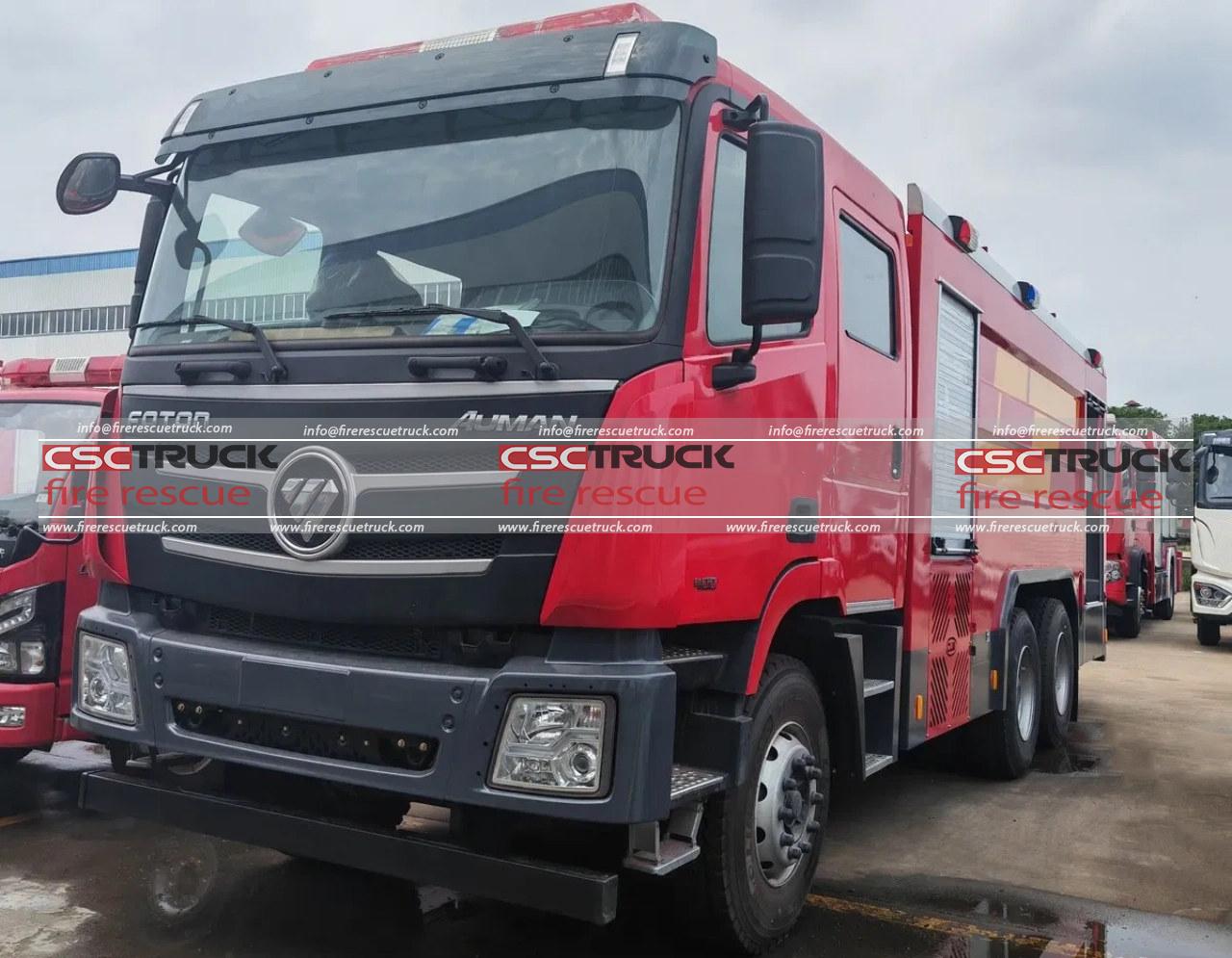
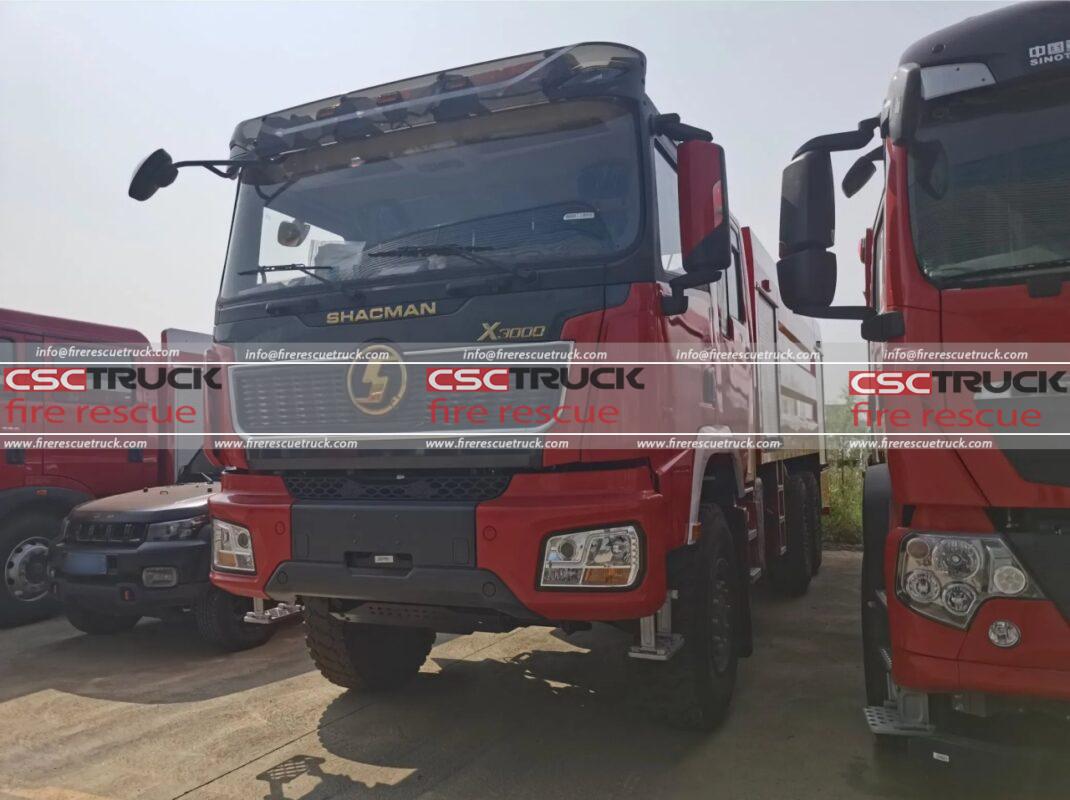
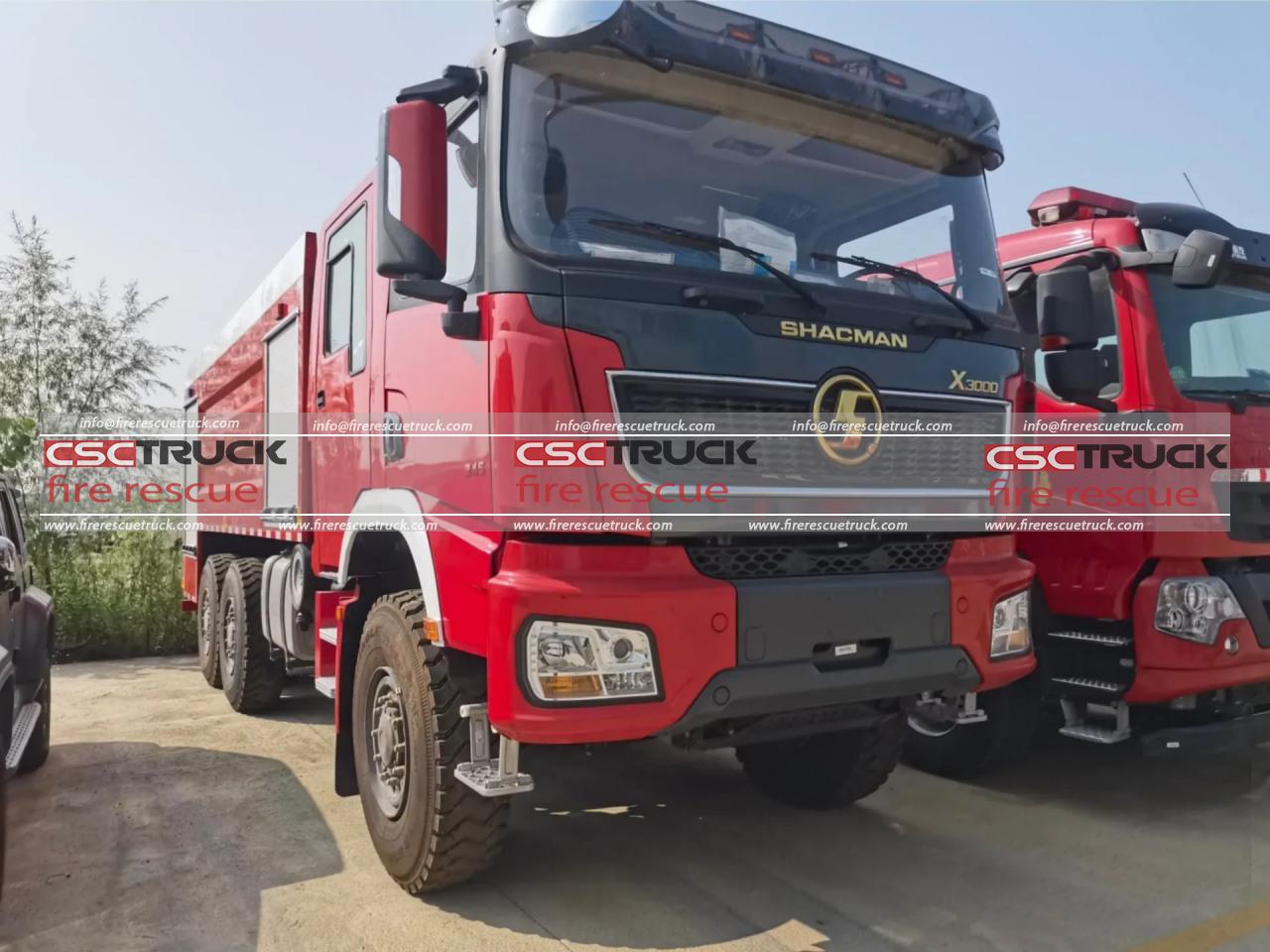
A 6×6 fire truck is built on a 6-wheel-drive chassis, meaning power is delivered to all 3 axles. This configuration provides significantly improved traction, stability, and off-road performance compared with conventional 4×2 or 4×4 firefighting vehicles.
A typical 6×6 fire truck may include:
- 3 powered axles
- Heavy-duty suspension systems
- Larger water and foam tanks
- Higher ground clearance
- Advanced firefighting monitors
- Rescue equipment storage
- Long-range operational capability
For example, CSCTRUCK Fire Rescue Truck’s 6×6 firefighting vehicles are designed for applications including wildfires, mining areas, military facilities, industrial sites, airports, and disaster response environments where normal fire trucks may struggle to reach the scene.
1. Off-Road Capability: The Biggest Advantage of a 6×6
The most significant difference between a 6×6 fire truck and a standard pumper is terrain capability.
Standard pumpers are optimized for:
- City streets
- Highways
- Industrial parks
- Developed communities
A 6×6 fire truck is designed to operate in:
- Mud
- Sand
- Snow
- Mountain roads
- Forest trails
- Flooded areas
- Uneven construction sites
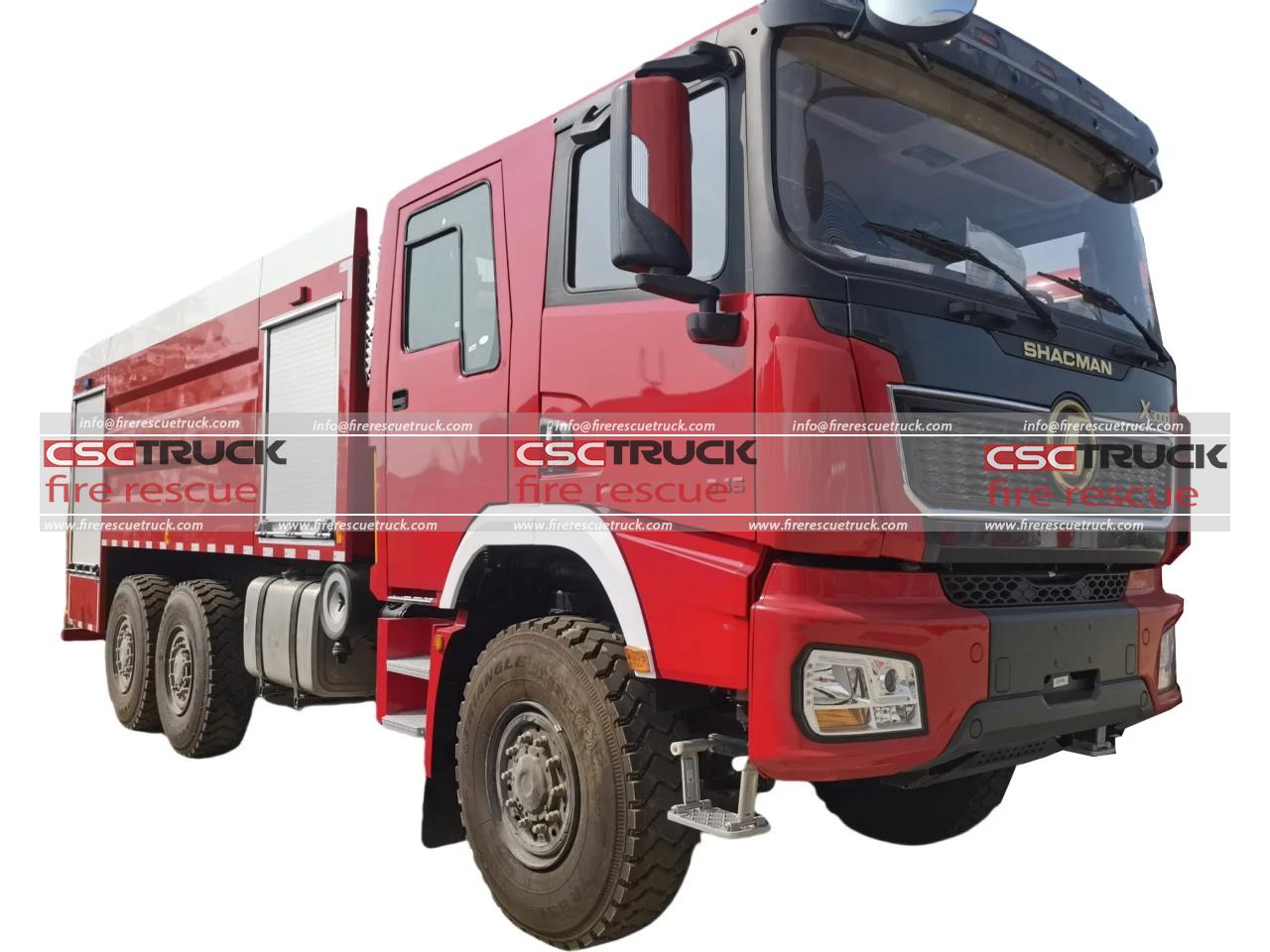
The additional driven axle increases traction because more wheels actively transfer engine power to the ground. This allows firefighters to reach locations where traditional pumpers may become stuck or unable to operate.
For wildland firefighting, this capability can be critical. Fires in forests, grasslands, and remote regions often develop far away from paved roads, requiring vehicles capable of carrying water and equipment directly into difficult terrain.
2. Water and Firefighting Capacity
Another advantage of a 6×6 fire truck is its larger payload capacity.
Because of the stronger chassis and additional axle support, many 6×6 fire trucks can carry:
- Larger water tanks
- More foam concentrate
- Additional rescue equipment
- Specialized firefighting modules
This makes them suitable for situations where water sources are limited.
For example, CSCTRUCK Fire Rescue Truck produces large 6×6 airport rescue firefighting vehicles with capacities reaching thousands of liters of water and foam, designed for rapid response to aircraft emergencies and large-scale fires. One example features a 6×6 configuration, a 13,500-liter water tank, a 1,700-liter foam tank, and high-flow firefighting monitors.
A standard pumper may depend more heavily on nearby hydrants or tanker support, while a 6×6 unit can operate independently for longer periods.
3. Speed and Response in Difficult Conditions
Emergency response is not only about horsepower—it is about reaching the fire scene quickly.
On normal roads, a standard pumper may be faster and easier to maneuver because it is smaller and lighter. However, when roads become damaged or unavailable, a 6×6 truck has a major advantage.
A 6×6 vehicle can maintain mobility through:
- Deep mud
- Loose gravel
- Steep slopes
- Rocky terrain
- Off-road routes
This makes it especially valuable for:
- Wildland fire agencies
- Oil and gas facilities
- Mining companies
- Airports
- Military emergency units
4. Rescue and Multi-Function Capability
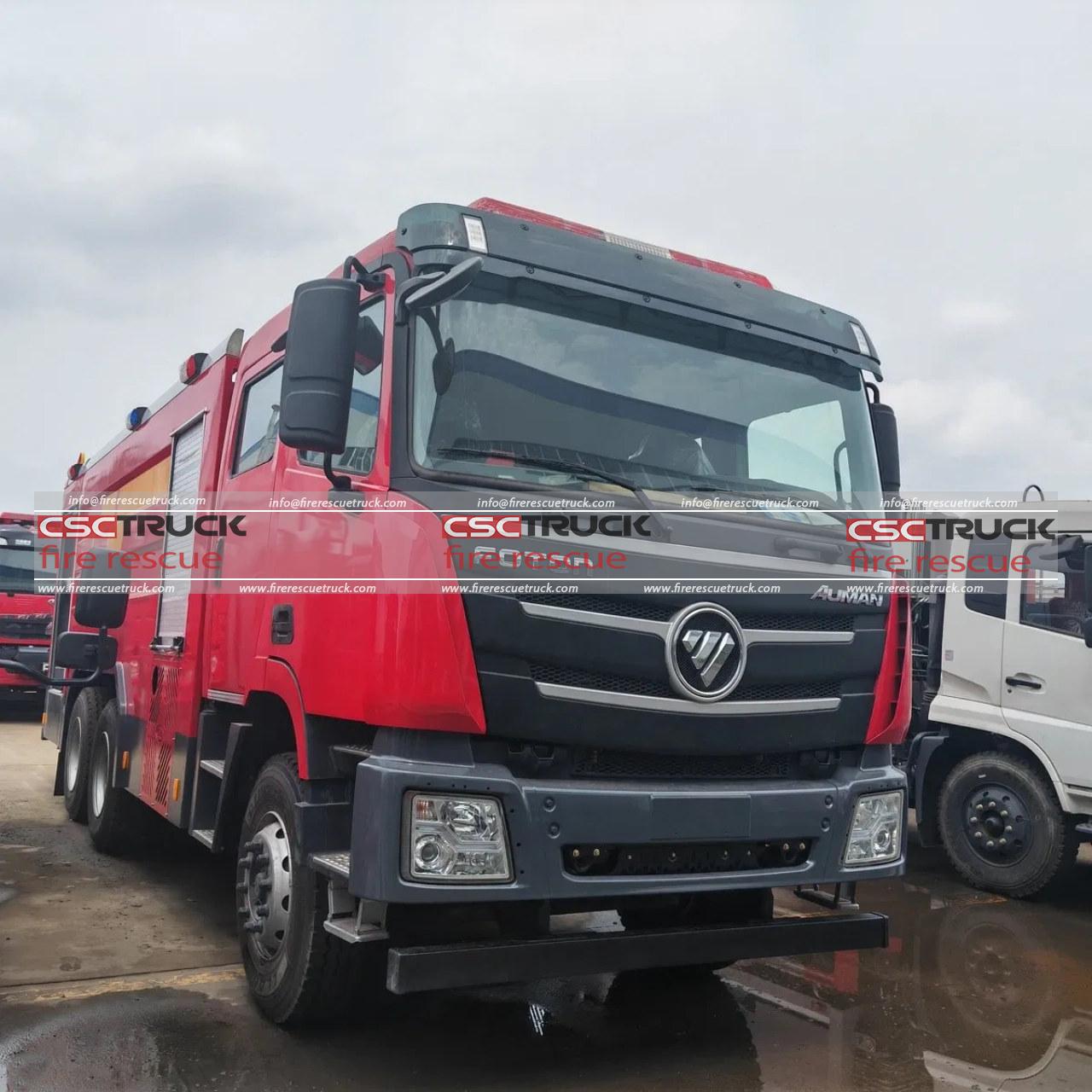
Modern 6×6 fire trucks are often designed as multi-purpose emergency platforms.
Besides firefighting, they can carry:
- Rescue tools
- Lighting equipment
- Communication systems
- Medical supplies
- Recovery equipment
- Disaster response modules
CSCTRUCK Fire Rescue Truck’s 6×6 combination rescue fire truck, for example, is designed as a multifunctional rescue platform capable of carrying extensive rescue equipment and supporting emergency operations in challenging environments.
This flexibility allows one vehicle to support several emergency roles.
5. Cost and Maintenance Considerations
Although 6×6 fire trucks offer impressive capabilities, they also have disadvantages.
Compared with standard pumpers, they generally have:
- Higher purchase costs
- More complex drivetrains
- Higher fuel consumption
- More expensive maintenance
- Larger vehicle dimensions
A city fire department that mainly responds to building fires on paved roads may not benefit enough from a 6×6 truck to justify the additional investment.
In contrast, organizations working in remote environments may consider the extra cost worthwhile because vehicle accessibility can determine whether firefighters reach the emergency location at all.
6. Which One Is Better for Different Applications?
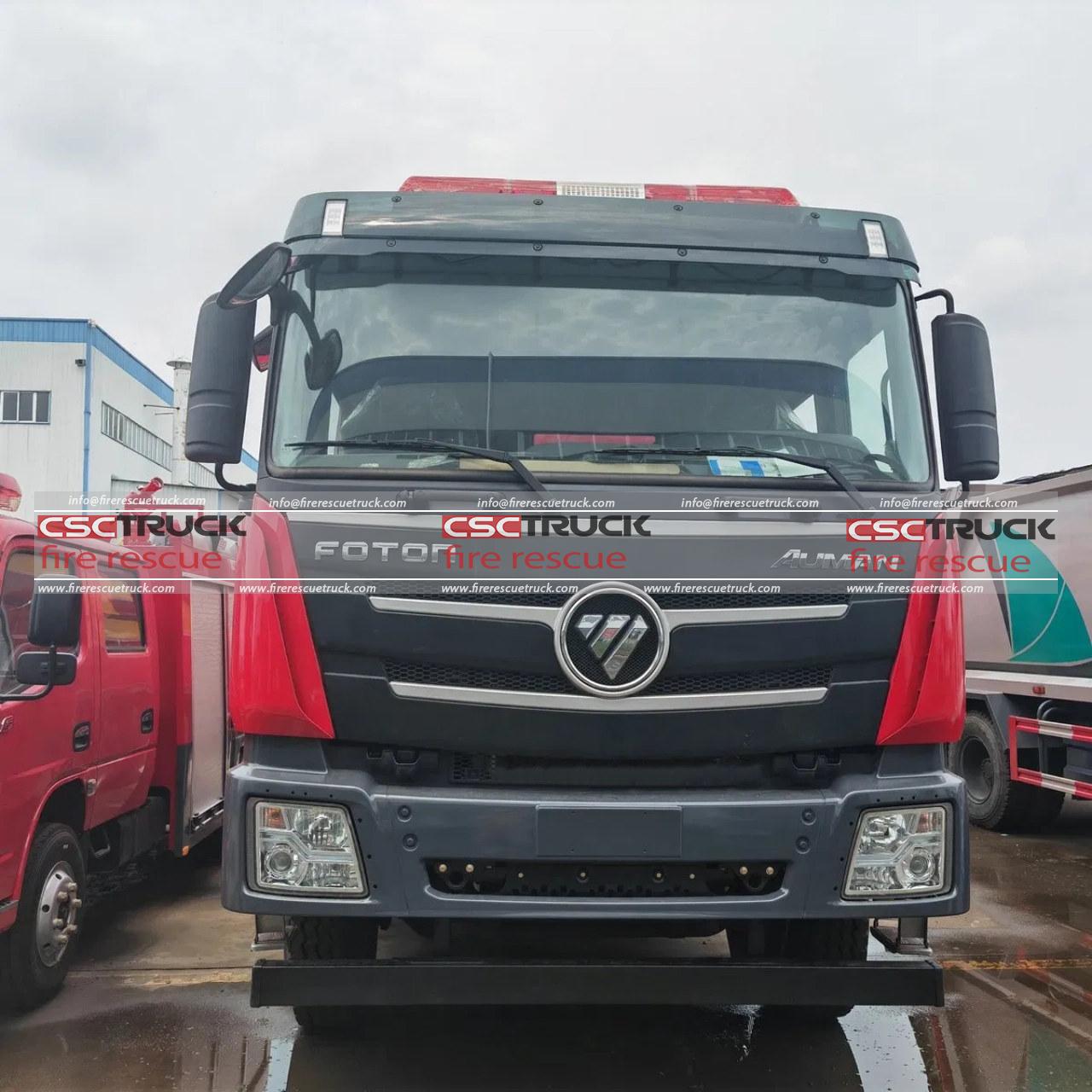
The answer depends on the operating environment.
Standard Pumper Is Better For:
- Urban fire departments
- Residential neighborhoods
- Commercial buildings
- Areas with good road networks
- Daily emergency response
Advantages:
✓ Lower cost
✓ Easier driving
✓ Better city maneuverability
✓ Lower maintenance requirements
6×6 Fire Truck Is Better For:
- Wildland firefighting
- Mountain regions
- Mining operations
- Oil fields
- Airports
- Military facilities
- Disaster response
Advantages:
✓ Superior off-road mobility
✓ Larger firefighting capacity
✓ Longer operational endurance
✓ Better performance in extreme conditions
Conclusion: Is a 6×6 Fire Truck Better Than a Standard Pumper?
A 6×6 fire truck is not universally better than a standard pumper—it is better for specific missions.
A standard pumper remains the ideal solution for most urban firefighting because it is economical, flexible, and easy to operate. However, when emergencies occur in remote or difficult environments, a 6×6 fire truck provides unmatched mobility, capacity, and operational reliability.
For fire departments and organizations that need to fight fires beyond paved roads, invest in disaster response capability, or protect large industrial and remote areas, a 6×6 fire truck can be a valuable addition to their emergency fleet.
With advanced manufacturers such as CSCTRUCK Fire Rescue Truck developing customized 6×6 firefighting solutions, modern emergency vehicles continue to expand the ability of firefighters to respond faster and more effectively in the world’s most challenging environments.