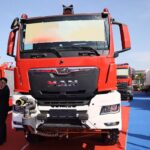

Airports operate in one of the most demanding emergency environments in the world. Aircraft carry large quantities of fuel, passenger numbers can reach hundreds, and incidents during takeoff, landing, or taxiing can develop rapidly. To handle these risks, airports rely on specialized Airport Firefighting Vehicles, also known as Aircraft Rescue and Fire Fighting (ARFF) vehicles. Unlike standard municipal fire trucks, these vehicles are engineered for extreme speed, high-volume firefighting, and aircraft rescue operations.
For airport authorities, aviation companies, military airbases, and emergency response organizations, selecting the right airport firefighting vehicle is a critical investment. Buyers need to evaluate not only firefighting capacity but also mobility, reliability, safety systems, maintenance requirements, and compliance with international aviation standards.
Introduction to CSCTRUCK Fire Rescue Truck
CSCTRUCK Fire Rescue Truck, available through FireRescueTruck.com, specializes in manufacturing and supplying advanced fire and rescue vehicles, including airport rescue firefighting (ARFF) trucks designed for aviation emergencies. The company provides customized firefighting solutions with different chassis options, tank capacities, firefighting systems, and equipment configurations to meet various airport operational requirements.
With experience in producing specialized vehicles such as airport fire trucks, pumper fire trucks, rescue trucks, hazmat vehicles, and aerial firefighting vehicles, CSCTRUCK Fire Rescue Truck focuses on combining powerful performance, durable construction, and flexible customization for global customers. Its ARFF solutions are designed for rapid response, large-scale fire suppression, and reliable operation in demanding airport environments.

What Is an Airport Firefighting Vehicle?
An airport firefighting vehicle is a specially designed emergency truck used to respond to aircraft fires, fuel spills, runway accidents, and other aviation-related emergencies. These vehicles are commonly called:
- Airport fire trucks
- ARFF trucks
- Aircraft rescue fire fighting vehicles
- Airport crash tenders
- Aircraft firefighting vehicles
The primary mission of an ARFF vehicle is to reach an aircraft emergency quickly, suppress fire, create safe conditions for evacuation, and support rescue operations.
Compared with conventional fire engines, airport firefighting vehicles are built around several special requirements:
- Extremely fast acceleration
- Large water and foam capacity
- Powerful firefighting monitors
- Off-road airfield mobility
- Advanced rescue equipment
- High reliability under harsh conditions
1. High-Speed Performance and Rapid Response Capability
Speed is one of the most important features of an airport firefighting vehicle.
Airports can cover thousands of acres, and an aircraft emergency may occur anywhere on runways, taxiways, or surrounding safety areas. ARFF vehicles must quickly reach the incident location to begin firefighting before conditions worsen.
Modern airport fire trucks typically feature:
- High-power diesel engines
- Heavy-duty transmissions
- Advanced suspension systems
- Large-diameter tires
- All-wheel-drive capability
Some high-performance ARFF trucks use 4×4, 6×6, or even larger drivetrains to provide rapid acceleration and excellent maneuverability on airport surfaces.
When purchasing an airport firefighting vehicle, buyers should evaluate:
- Maximum speed
- Acceleration performance
- Driving stability
- Turning radius
- Terrain adaptability
A fast vehicle can significantly improve emergency response efficiency.

2. Large Water and Foam Tank Capacity
Aircraft fires are often associated with aviation fuel, which requires specialized firefighting agents. Therefore, ARFF vehicles carry much larger quantities of water and foam compared with normal fire engines.
Important tank specifications include:
Water Tank
The water tank provides the primary firefighting supply. Capacity depends on:
- Airport category
- Aircraft size
- Local regulations
- Emergency response requirements
Large ARFF trucks may carry thousands of liters of water to support extended firefighting operations.
Foam Tank
Foam is essential for controlling aviation fuel fires because it helps suppress flames and prevent fuel vapor ignition.
A typical airport firefighting vehicle includes:
- Foam concentrate tank
- Foam proportioning system
- Foam delivery pipelines
- Foam-compatible monitors
Buyers should consider both capacity and foam system accuracy when selecting a vehicle.
3. Powerful Fire Pump System
A high-performance pump is the heart of an airport firefighting vehicle.
The pump must provide:
- High flow rate
- Stable pressure
- Reliable operation
- Continuous firefighting capability
A powerful pump allows the truck to operate roof monitors, bumper monitors, and handlines simultaneously.
For example, some advanced ARFF trucks are equipped with high-flow pumps capable of delivering several thousand liters of firefighting agent per minute.
When comparing different models, buyers should check:
- Pump flow rate
- Operating pressure
- Pump material
- Maintenance requirements

4. Roof Turret and Bumper Monitor Systems
One of the most recognizable features of airport firefighting vehicles is the firefighting monitor.
These systems allow firefighters to attack aircraft fires from a safer distance.
Common configurations include:
Roof Monitor
Mounted on top of the vehicle, the roof turret provides:
- Long-range firefighting capability
- Large foam discharge volume
- Wide spray coverage
Front Bumper Monitor
A bumper-mounted monitor allows firefighters to direct extinguishing agents toward the front area of the vehicle while approaching the fire.
Advanced ARFF trucks may also include:
- Remote-controlled monitors
- High Reach Extendable Turrets (HRET)
- Aircraft skin penetration systems
These technologies improve firefighting effectiveness during complex aircraft incidents.
5. Strong Off-Road and Airfield Mobility
Airport emergencies do not always happen on paved surfaces. Aircraft may leave runways or become stranded on grass, gravel, mud, or uneven terrain.
Therefore, airport firefighting vehicles require excellent mobility.
Important mobility features include:
- 4WD or 6WD systems
- Heavy-duty axles
- Reinforced suspension
- High ground clearance
- Anti-slip tires
A vehicle with strong off-road capability ensures firefighters can reach accident locations regardless of surface conditions.

6. Advanced Rescue Equipment
Fire suppression is only part of an ARFF vehicle’s mission. Aircraft accidents often require passenger rescue and emergency extraction.
Depending on configuration, airport firefighting vehicles may carry:
- Hydraulic rescue tools
- Cutting equipment
- Breathing apparatus
- Emergency lighting
- Medical supplies
- Communication equipment
- Thermal imaging systems
A well-equipped ARFF truck functions as both a firefighting platform and a rescue support vehicle.
7. Durable Chassis and Construction Quality
Airport firefighting vehicles must operate reliably in extreme environments, including:
- Desert heat
- Cold climates
- High humidity
- Dusty airfields
- Continuous emergency operations
Buyers should evaluate:
- Chassis manufacturer
- Engine reliability
- Corrosion protection
- Tank materials
- Spare parts availability
Common chassis options include brands such as Mercedes-Benz, Scania, MAN, SINOTRUK, and other heavy-duty platforms depending on project requirements.

8. Compliance With Aviation Standards
Before purchasing an airport firefighting vehicle, buyers should confirm that the truck meets applicable requirements.
Common standards and references include:
- ICAO airport rescue firefighting recommendations
- NFPA firefighting standards
- Local aviation authority requirements
The vehicle configuration should match:
- Airport category
- Aircraft types served
- Passenger volume
- Climate conditions
- Emergency response plans
A suitable ARFF truck is not simply the largest model available; it is the vehicle that matches the airport’s actual operational needs.
9. Customization Options for Different Airports
Different airports require different firefighting solutions.
Manufacturers can customize ARFF vehicles according to:
- Water capacity
- Foam capacity
- Dry powder systems
- Chassis type
- Cabin design
- Rescue equipment
- Communication systems
CSCTRUCK Fire Rescue Truck provides customized airport firefighting vehicle solutions for different applications, including civil airports, military airfields, and industrial aviation facilities.

How to Choose the Right Airport Firefighting Vehicle
Before purchasing an ARFF truck, buyers should review the following factors:
- Airport category and aircraft size
- Required firefighting agent capacity
- Vehicle speed and acceleration
- Pump and monitor performance
- Driving terrain conditions
- Rescue equipment requirements
- Maintenance support
- Spare parts availability
- Manufacturer experience
- Total lifecycle cost
A professional supplier should provide technical consultation, customization support, operator training, and after-sales service.
Conclusion
An airport firefighting vehicle is a highly specialized emergency machine designed to protect passengers, aircraft, and airport infrastructure. Its performance depends on multiple systems working together, including high-speed mobility, large-capacity water and foam tanks, powerful pumps, firefighting monitors, rescue equipment, and durable chassis technology.
For airports looking to upgrade their emergency response capabilities, choosing the right ARFF truck requires careful consideration of operational requirements, safety standards, and long-term reliability.
CSCTRUCK Fire Rescue Truck provides customized airport firefighting solutions that combine advanced firefighting technology, strong vehicle performance, and flexible configurations to support aviation safety operations worldwide.