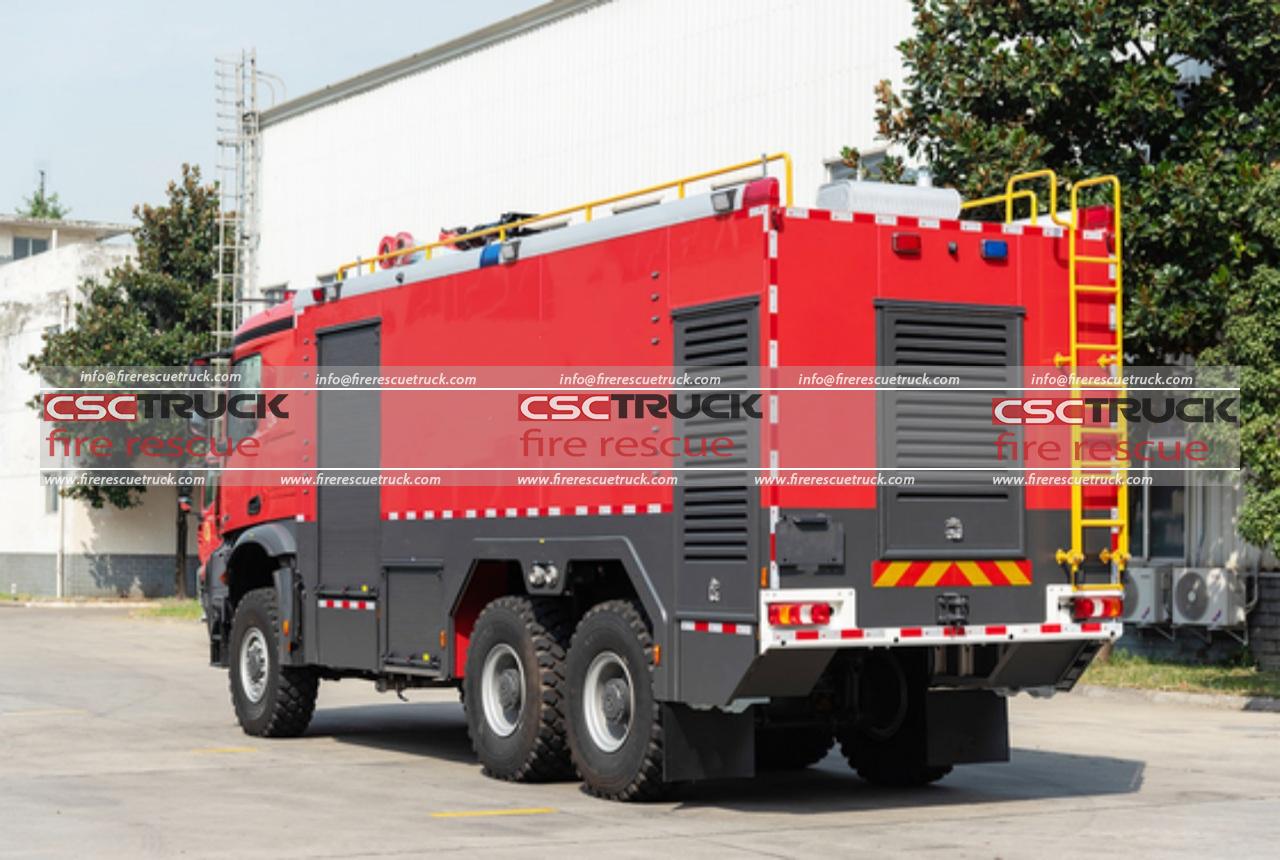
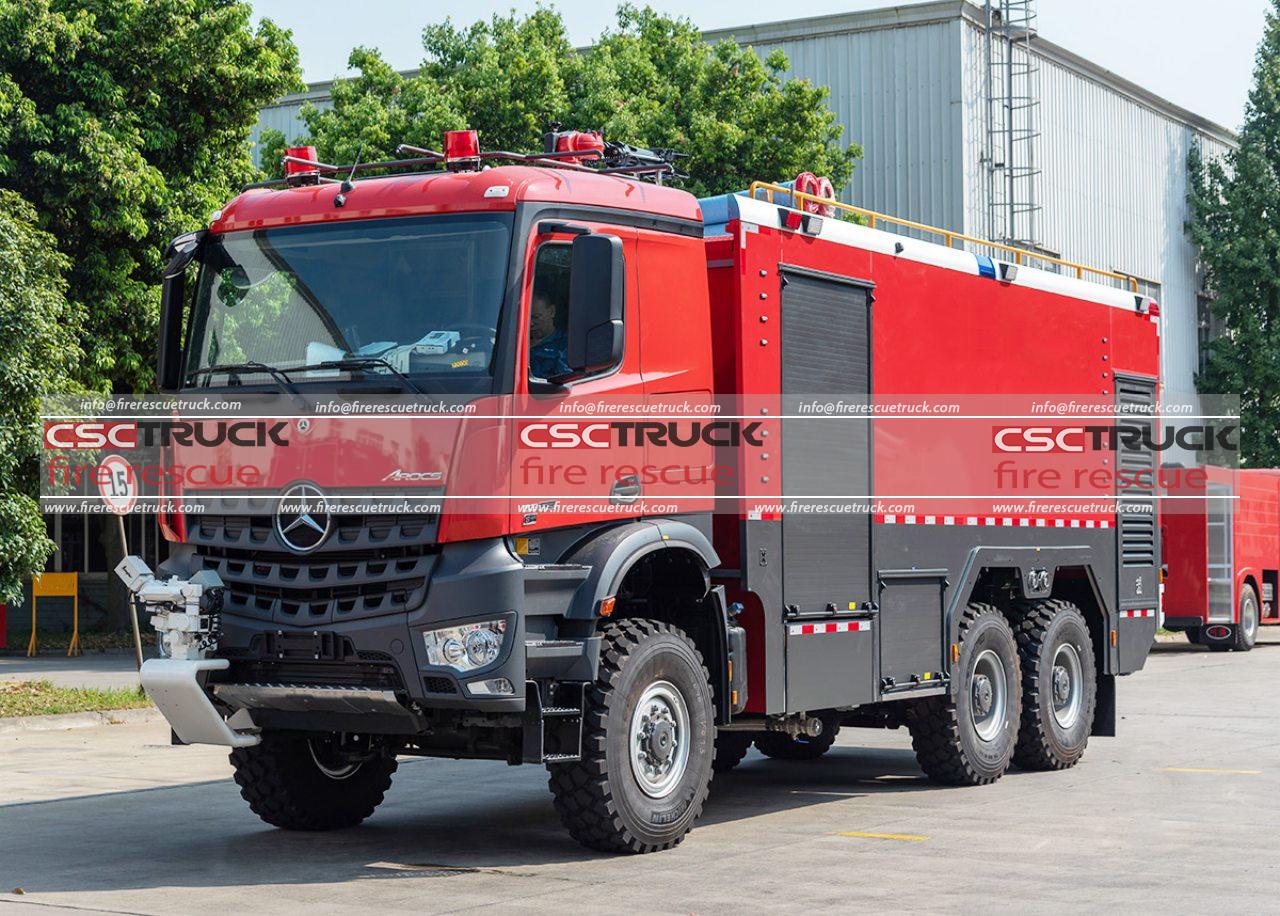
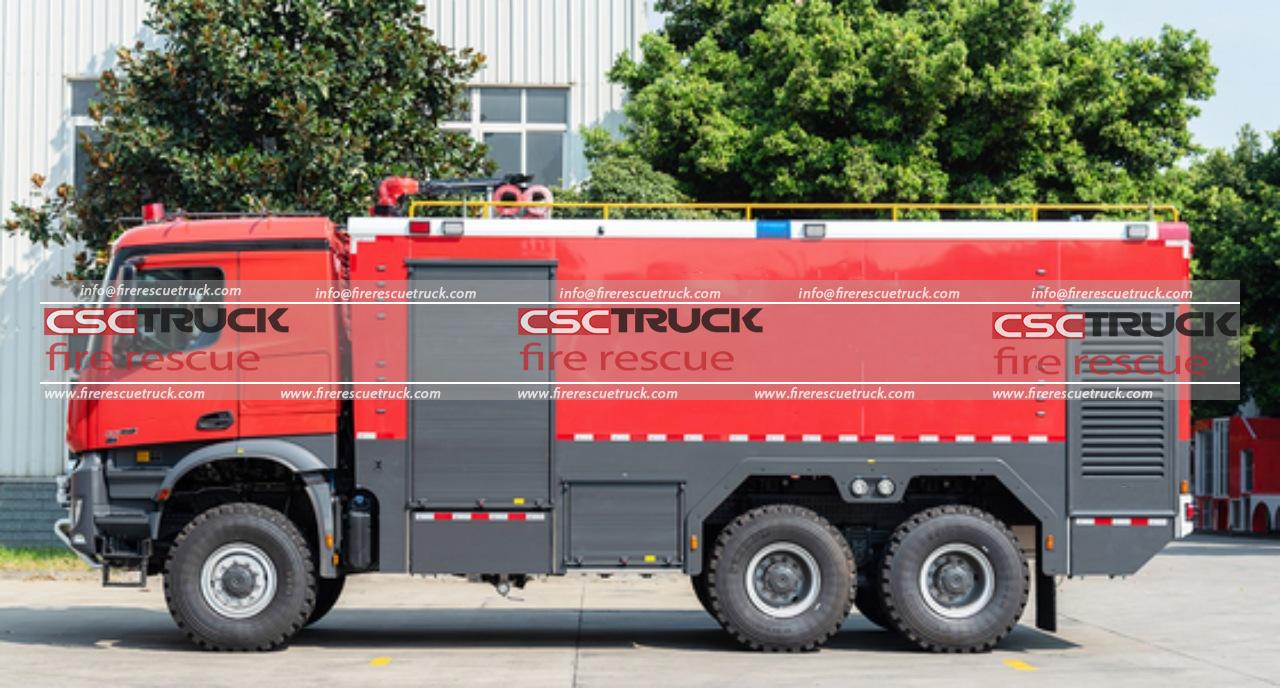
A crash fire tender is one of the most important emergency vehicles operating at modern airports. Also known as an airport fire truck, airport crash truck, airport rescue tender, or Aircraft Rescue and Fire Fighting (ARFF) vehicle, it is specifically designed to respond to aircraft accidents, aviation fuel fires, runway emergencies, and other airfield incidents.
Unlike conventional municipal fire engines, crash fire tenders combine high-speed response, large firefighting-agent capacity, powerful pumps, long-range monitors, and all-terrain mobility. Their primary purpose is to reach an aircraft emergency rapidly and begin fire suppression and rescue operations before the situation escalates.
What Is a Crash Fire Tender?
A crash fire tender (CFT) is a specialized airport firefighting vehicle engineered for aircraft rescue and fire suppression. Aircraft accidents present unique hazards because aviation fuel can produce intense, rapidly spreading fires, while aircraft structures can make passenger rescue particularly difficult.
A crash tender therefore needs to do much more than simply transport firefighters and water. It must be capable of:
Rapid acceleration and high-speed airfield response
Carrying large quantities of water and foam concentrate
Producing high-flow firefighting streams
Applying foam over aviation fuel fires
Operating on runways, taxiways, grass, gravel, and other surfaces
Supporting aircraft rescue and evacuation
Operating safely under extreme heat and demanding conditions
Modern airport firefighting vehicles may use 4×4, 6×6, or 8×8 chassis, depending on the required capacity, terrain, and airport operational needs.
CSCTRUCK Fire Rescue Truck for Airport Applications
CSCTRUCK Fire Rescue Truck, available through FireRescueTruck.com, specializes in fire and rescue vehicles for demanding emergency applications, including airport rescue and firefighting.
Its ARFF solutions combine high mobility, large water and foam capacity, powerful pumps, firefighting monitors, and rugged chassis configurations. Depending on project requirements, airport operators can select or customize vehicle configurations according to firefighting capacity, chassis type, tank volume, terrain, and equipment requirements.
CSCTRUCK Fire Rescue Truck also supplies a broader range of specialized fire apparatus, including water tender fire trucks, rescue vehicles, aerial fire trucks, hazmat vehicles, and other emergency response vehicles. This makes it possible for airports, government agencies, fire departments, aviation companies, and international distributors to source different emergency vehicles from 1 manufacturer.
Key Components of a Crash Fire Tender
1. High-Performance Chassis
The chassis is the foundation of an airport crash tender. It must carry heavy tanks and firefighting equipment while maintaining rapid acceleration and stable handling.
Large ARFF vehicles commonly use 6×6 or 8×8 configurations. All-wheel drive improves traction on wet runways, grass, gravel, soft ground, and other surfaces surrounding the airfield.
High ground clearance, heavy-duty suspension, and suitable tires are also important for operating beyond paved surfaces.
2. Water and Foam Tanks
Large water and foam capacities are essential because aircraft emergencies can require substantial quantities of extinguishing agent.
Crash tenders generally carry:
Water
Foam concentrate
Optional dry chemical powder or other complementary agents
The required capacity depends on the airport’s firefighting category, aircraft characteristics, applicable regulations, and operational strategy. ICAO materials specify different firefighting requirements according to aerodrome category, with higher categories generally requiring greater firefighting capability.
3. Fire Pump
The fire pump converts the vehicle’s stored water into a high-pressure firefighting stream. Because airport incidents may require long-range application, the pump must provide sufficient flow and pressure for roof monitors, bumper turrets, handlines, and other outlets.
Pump capacity should be considered together with tank size and monitor performance rather than evaluated as an isolated specification.
4. Roof and Bumper Monitors
One of the most recognizable features of a crash fire tender is its large firefighting monitor.
A roof-mounted monitor can project water or foam over a considerable distance toward an aircraft or fuel fire. A front or bumper monitor can provide additional coverage while the vehicle approaches the incident.
Remote-controlled monitors allow firefighters to direct extinguishing agents while remaining inside the protected cab.
Some advanced ARFF vehicles can also incorporate high-reach systems designed to penetrate aircraft fuselages and deliver extinguishing agents into difficult-to-access areas.
5. Foam Proportioning System
Foam is particularly important for aviation fuel fires. A foam system mixes foam concentrate with water at the required proportion before the solution is discharged through the firefighting system.
The resulting foam helps suppress burning fuel and reduce the risk of fire re-ignition.
Airport authorities should therefore evaluate not only the size of the foam tank but also foam-agent compatibility, proportioning accuracy, discharge performance, and applicable regulatory requirements.
6. Rescue Equipment
Fire suppression is only one part of aircraft emergency response. A crash tender or associated ARFF fleet may also carry rescue equipment such as:
Hydraulic rescue tools
Cutting and spreading equipment
Portable lighting
Breathing apparatus
Rescue ropes
First-aid equipment
Communication equipment
Thermal imaging equipment
The exact equipment package should reflect the airport’s emergency response plan.
How Does a Crash Fire Tender Work?
The basic operating sequence is straightforward but must be supported by intensive training.
When an aircraft emergency is reported, the ARFF crew receives the location and incident information and immediately deploys toward the affected runway, taxiway, apron, or surrounding area.
The vehicle’s high-power engine and all-wheel-drive system allow it to travel rapidly across the airfield. Once the crew reaches the incident, the operator can deploy the roof and bumper monitors and begin applying foam or water.
The initial objective is usually to control the fire, reduce heat exposure, protect evacuation routes, and create safer conditions for rescue personnel. Additional ARFF vehicles can then support extinguishment, rescue, cooling, and other operations.
This combination of speed, firefighting capacity, and rescue capability is what distinguishes a crash tender from a standard fire engine.
Crash Fire Tender vs. Conventional Fire Truck
Although both vehicles are firefighting machines, their designs are significantly different.
Feature
Crash Fire Tender
Conventional Fire Truck
Primary environment
Airport/airfield
Urban or industrial areas
Main hazard
Aircraft and aviation fuel
Building, vehicle, industrial fires
Response priority
Very high-speed airfield response
Road-based emergency response
Water/foam capacity
Generally large
Varies
Chassis
Often 4×4, 6×6, 8×8
Commonly road-oriented
Main firefighting equipment
High-flow monitors and foam systems
Pump, hoses, ladders, nozzles
Terrain capability
Runway and off-road capable
Primarily paved roads
Aircraft rescue equipment
Frequently integrated
Usually limited
This specialized design allows crash tenders to perform effectively in environments where ordinary municipal fire engines may not provide sufficient speed, capacity, or mobility.
Airport Standards and Vehicle Selection
Selecting a crash fire tender should begin with the airport’s operational requirements rather than simply choosing the vehicle with the largest engine or tank.
Important considerations include:
Airport rescue and firefighting category
Critical aircraft size
Runway and taxiway layout
Required response time
Water and foam requirements
Required number of ARFF vehicles
Terrain and climate
Maintenance and spare-parts availability
Crew capacity and ergonomics
Applicable national and international standards
ICAO‘s aerodrome rescue and firefighting framework establishes requirements related to firefighting capability and vehicle deployment, while standards such as NFPA 414 provide detailed requirements relevant to ARFF vehicle design and performance. Local civil aviation authorities may also impose additional requirements.
For this reason, airport operators should confirm the latest requirements with the relevant aviation authority before purchasing equipment.
Applications of Crash Fire Tenders
Crash fire tenders are primarily used at:
International airports
Regional airports
Cargo airports
Military airbases
Large aviation facilities
Aircraft maintenance facilities
Specialized airfields
They can respond to aircraft crashes, runway fires, fuel spills, emergency landings, and other aviation-related incidents. Depending on the vehicle configuration, they may also provide support during industrial fires or other emergencies within airport property.
How to Choose the Right Crash Fire Tender
The ideal crash tender depends on the airport’s specific operational profile.
A small regional airport may require a more compact ARFF vehicle with adequate water and foam capacity and excellent maneuverability. A major international airport handling large wide-body aircraft may require several high-capacity 6×6 or 8×8 crash tenders with advanced monitor systems and extensive rescue equipment.
Before purchasing, airport authorities should request detailed specifications covering engine power, acceleration, maximum speed, water capacity, foam capacity, pump flow, monitor range, chassis configuration, overall dimensions, turning radius, crew capacity, and firefighting-agent compatibility.
After-sales service is equally important. Spare parts, technical support, operator training, preventive maintenance, and long-term availability can significantly affect the vehicle’s operational reliability.
Conclusion
A crash fire tender is a purpose-built airport firefighting vehicle designed around the unique risks of aviation emergencies. Its combination of rapid response, large firefighting-agent capacity, powerful pumps, foam systems, long-range monitors, rugged chassis, and rescue equipment makes it a critical component of airport emergency preparedness.
For airports evaluating new ARFF equipment, the right choice should be based on aircraft type, airport category, response requirements, terrain, firefighting-agent needs, applicable standards, and long-term maintenance considerations.
With experience in specialized firefighting vehicles, CSCTRUCK Fire Rescue Truck provides configurable ARFF and airport firefighting solutions for different airport and project requirements. Its range of fire and rescue vehicles can help airport operators and emergency-service organizations develop a firefighting fleet suited to their operational environment.