
Introduction: Transmission Choice for Modern Fire Rescue Trucks
When purchasing a heavy-duty vehicle such as a fire rescue truck, choosing the right transmission system is just as important as selecting the chassis, engine power, water tank capacity, or firefighting equipment. The transmission directly affects acceleration, fuel efficiency, driving comfort, maintenance costs, and the vehicle’s ability to perform under extreme emergency conditions.
For professional firefighting operations, where every second matters, the choice between a manual transmission and an automatic transmission can significantly influence operational efficiency. Modern fire departments, industrial emergency teams, airports, and disaster response organizations must carefully evaluate their working environment before making a decision.
As a professional manufacturer of firefighting vehicles, CSCTRUCK Fire Rescue Truck provides a wide range of customized fire apparatus designed for different operational requirements. Its product lineup includes pumper fire trucks, foam fire trucks, airport rescue firefighting vehicles, aerial ladder trucks, rescue trucks, and specialized emergency vehicles built on various chassis platforms. Customers can select suitable configurations, including chassis type, drivetrain, engine power, and transmission solutions, according to local terrain and firefighting missions.
Whether a fire truck operates in busy urban streets, mountainous regions, industrial zones, or airports, selecting the correct transmission system is essential for achieving reliable and rapid emergency response.
What Is a Manual Transmission?
A manual transmission, also known as a mechanical transmission, requires the driver to manually select gears using a gear lever and operate a clutch pedal. The driver controls when to shift gears according to vehicle speed, engine load, road conditions, and driving requirements.
Manual transmissions have been widely used in commercial trucks and emergency vehicles for decades because of their simplicity and durability.
Advantages of Manual Transmission
1. Better Driver Control
One of the biggest advantages of a manual gearbox is direct control. Experienced drivers can select the ideal gear based on terrain and operating conditions.
For example:
- Climbing steep roads
- Driving through mud or snow
- Operating in mountainous areas
- Controlling low-speed movement during rescue operations
A skilled driver can maintain better control by choosing the appropriate gear manually.
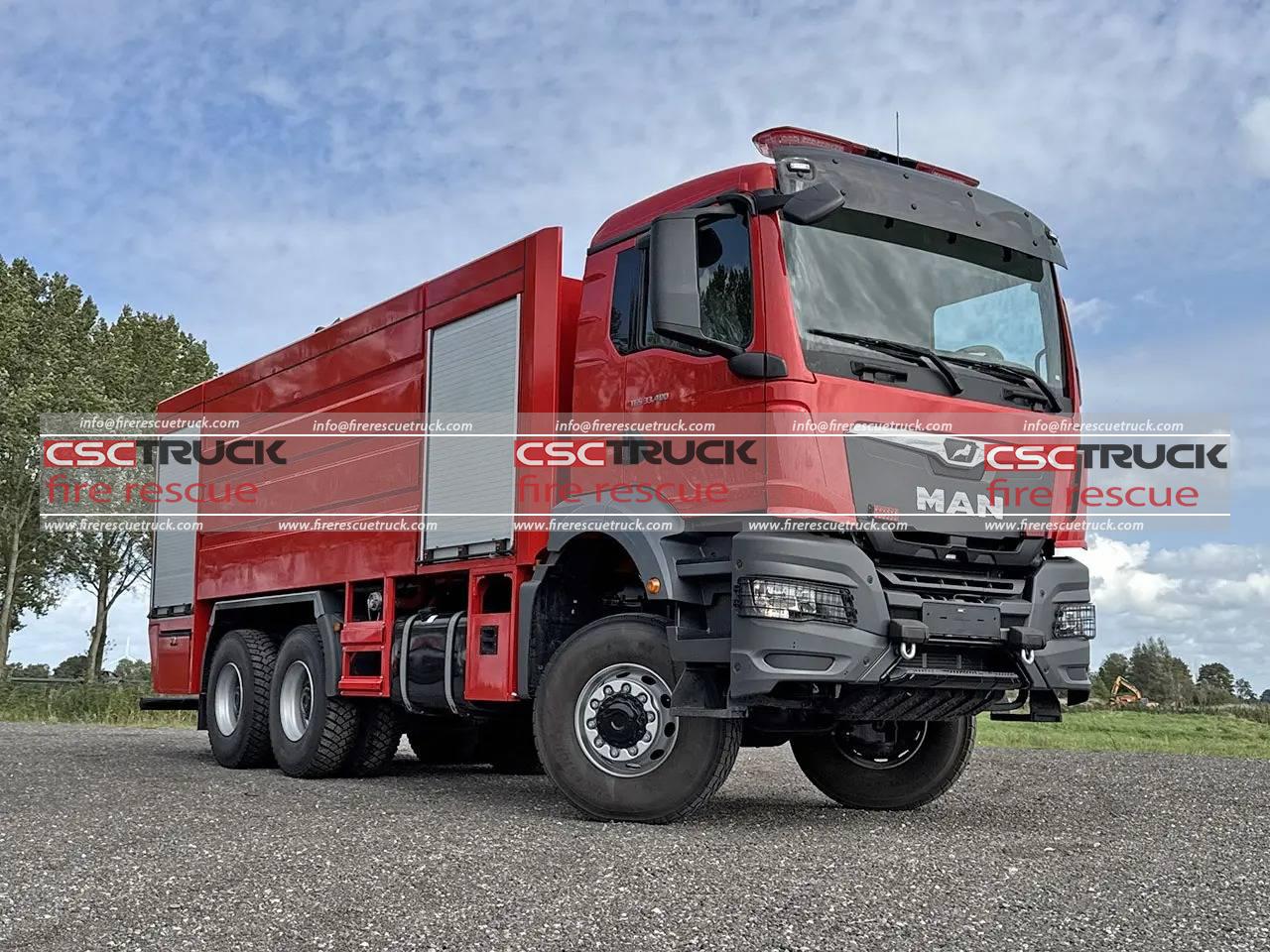
For off-road fire trucks, such as 4×4 or 6×6 rescue vehicles, this ability can be especially valuable when operating in forests, mines, deserts, or disaster areas.
2. Lower Purchase Cost
Manual transmissions are generally cheaper than automatic systems. For organizations with limited budgets, choosing a manual transmission can reduce the initial investment.
This can be important for:
- Small municipal fire departments
- Developing-country emergency services
- Industrial companies are purchasing multiple emergency vehicles
The saved budget can instead be invested in additional firefighting equipment, larger water tanks, rescue tools, or communication systems.
3. Easier Maintenance
Manual transmissions usually have fewer complex electronic components compared with modern automatic gearboxes.
Benefits include:
- Lower repair costs
- Easier troubleshooting
- Longer service life
- Availability of mechanical technicians in remote areas
For fire trucks operating in regions where professional maintenance facilities are limited, manual transmissions remain a practical choice.
Disadvantages of Manual Transmission
Despite these advantages, manual transmissions also have several limitations.
1. Higher Driver Skill Requirements
Operating a heavy fire truck with a manual transmission requires experienced drivers.
Firefighters must coordinate:
- Clutch operation
- Gear selection
- Engine speed control
- Vehicle weight management
During emergencies, inexperienced drivers may struggle to accelerate quickly or select the correct gear.
2. More Difficult in Heavy Traffic
Urban fire trucks frequently operate in congested environments. Constant shifting in city traffic can increase driver fatigue.
A firefighter responding to an emergency must focus on:
- Traffic conditions
- Navigation
- Radio communication
- Safety procedures
Reducing unnecessary driving workload can improve response effectiveness.
What Is an Automatic Transmission?
An automatic transmission changes gears automatically without requiring the driver to operate a clutch pedal manually.
Modern heavy-duty automatic transmissions use advanced electronic control systems that monitor:
- Vehicle speed
- Engine load
- Throttle position
- Road conditions
They automatically select the most suitable gear.
Advantages of Automatic Transmission
1. Faster Emergency Response
For fire trucks, rapid acceleration is critical.
Automatic transmissions allow drivers to focus completely on emergency driving instead of shifting gears manually.
Advantages include:
- Smooth acceleration
- Faster gear changes
- Reduced driver workload
- Improved response consistency
When firefighters receive an emergency call, the ability to immediately accelerate without worrying about clutch control can save valuable time.
2. Easier Operation
Automatic transmissions are much easier to operate, especially for younger firefighters or drivers who do not regularly operate heavy vehicles.
Training requirements are reduced because drivers only need to manage:
- Steering
- Braking
- Vehicle positioning
This allows fire departments to maintain a larger pool of qualified drivers.
3. Better Performance in Urban Environments
Most modern fire departments operate primarily in cities.
Automatic transmissions perform well in:
- Heavy traffic
- Frequent stops
- Narrow streets
- Residential areas
A pumper truck responding through busy urban roads benefits greatly from smoother operation.
4. Reduced Driver Fatigue
Firefighters often work long shifts and respond to multiple emergencies.
An automatic gearbox reduces physical workload, allowing drivers to remain more alert.
This is particularly valuable for:
- Airport rescue vehicles
- Large water tankers
- Aerial ladder trucks
- Heavy rescue vehicles
Disadvantages of Automatic Transmission
1. Higher Initial Cost
Automatic transmission systems are usually more expensive due to:
- Electronic control systems
- Advanced components
- More complex manufacturing
The purchase price of an automatic fire truck may be higher than that of an equivalent manual model.
2. More Complex Maintenance
Automatic transmissions require specialized knowledge and equipment.
Potential challenges include:
- Higher repair costs
- More expensive replacement parts
- Dependence on electronic diagnostics
For remote areas, maintenance availability should be considered before choosing an automatic system.
Manual vs Automatic Transmission: Comparison
| Feature | Manual Transmission | Automatic Transmission |
|---|---|---|
| Purchase Cost | Lower | Higher |
| Driver Training | Requires more skill | Easier |
| Driving Comfort | Moderate | Excellent |
| Urban Operation | Less convenient | Excellent |
| Off-road Control | Excellent for skilled drivers | Very good |
| Maintenance Cost | Lower | Higher |
| Emergency Response | Good | Excellent |
| Driver Fatigue | Higher | Lower |
Which Transmission Is Better for a Fire Truck?
The answer depends on the mission.
Choose Manual Transmission If:
A manual transmission may be the better choice when:
- Operating in remote areas
- Driving on rough terrain
- Budget is a major concern
- Local maintenance capability is limited
- Experienced drivers are available
Examples include:
- Forest firefighting vehicles
- Mountain rescue trucks
- Military-style emergency vehicles
- Rural firefighting units
Choose Automatic Transmission If:
An automatic transmission is usually better when:
- Fast response is the priority
- The vehicle operates mainly in cities
- Multiple firefighters may drive the truck
- Driver comfort is important
- The vehicle is large and heavy
Examples include:
- Urban pumper trucks
- Airport rescue firefighting trucks
- Aerial platform trucks
- High-capacity foam fire trucks
How CSCTRUCK Fire Rescue Truck Helps Customers Choose the Right Configuration
Selecting the correct transmission is only one part of designing an effective fire rescue vehicle. A complete solution must consider:
- Chassis capability
- Engine power
- Drive configuration
- Pump performance
- Tank capacity
- Rescue equipment
- Operating environment
CSCTRUCK Fire Rescue Truck offers customized emergency vehicles built on different chassis platforms, including configurations suitable for urban firefighting, industrial protection, airport emergency response, and challenging terrain operations. The company provides flexible OEM and customized solutions to meet different international requirements.
For example:
- A city fire department may prefer an automatic transmission pumper truck for quick response.
- A mining company may require a manual 6×6 rescue truck for harsh terrain.
- An airport may choose a high-performance automatic ARFF truck for maximum acceleration and reliability.

Conclusion
Both manual and automatic transmissions have their own advantages. Manual transmissions offer simplicity, lower cost, and excellent driver control, while automatic transmissions provide easier operation, faster response, and improved driver comfort.
For modern firefighting operations, automatic transmissions are increasingly becoming the preferred choice because emergency vehicles require fast acceleration, reduced driver workload, and consistent performance. However, manual transmissions remain valuable for specialized applications where durability, terrain capability, and maintenance simplicity are priorities.
The best transmission choice depends on the specific mission, environment, and operational requirements. By selecting the right drivetrain configuration from a professional manufacturer such as CSCTRUCK Fire Rescue Truck, emergency organizations can ensure their fire vehicles deliver reliable performance when every second counts.