
Introduction
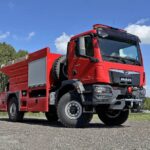
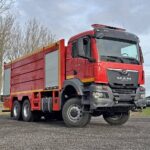
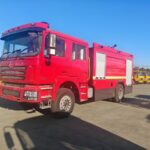
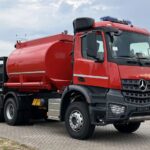
A water tender, also known as a tanker in some regions, is a specialized firefighting vehicle designed primarily to transport large volumes of water to areas where hydrants or fixed water supplies are unavailable. Water tenders play a crucial role in rural firefighting, wildland fire suppression, industrial fire protection, and emergency water shuttle operations. While the large water tank is the most visible feature of a water tender, the fire pump installed on the vehicle is equally important because it determines how efficiently water can be transferred, drafted, and delivered to firefighting operations.
Modern water tenders are equipped with various pump systems depending on their intended application, water capacity, and operational requirements. Understanding the types of fire pumps commonly installed on water tenders can help fire departments, fleet managers, and procurement specialists select the right apparatus for their specific needs.
CSCTRUCK Fire Rescue Truck is a professional manufacturer of firefighting vehicles, offering a wide range of water tenders, pumper trucks, foam fire trucks, airport crash tenders, and rescue vehicles. Their customized fire apparatus solutions are designed to meet international firefighting standards while providing reliable performance in urban, industrial, and rural environments.
The Most Common Fire Pump: Centrifugal Fire Pump
The vast majority of modern water tenders are equipped with centrifugal fire pumps. These pumps have become the industry standard because they offer excellent water flow rates, reliability, and ease of operation. A centrifugal pump uses a rapidly rotating impeller to generate centrifugal force, moving water from the pump inlet to the discharge outlets while increasing pressure.
Several advantages make centrifugal pumps ideal for water tenders:
- High water flow capacity
- Reliable and simple mechanical design
- Ability to operate under varying pressure conditions
- Lower maintenance requirements
- Smooth and continuous water delivery
Water tenders often carry between 1,500 and 5,000 gallons (5,700 to 19,000 liters) of water. The centrifugal pump allows firefighters to transfer this water efficiently to attack engines, portable tanks, or directly to firefighting hose lines.

Single-Stage Centrifugal Pumps
Many standard water tenders use a single-stage centrifugal pump. In this design, water passes through 1 impeller before being discharged.
Single-stage pumps are commonly selected because they:
- Deliver high water volume
- Have fewer moving parts
- Reduce maintenance costs
- Are suitable for most rural firefighting operations
Typical pump capacities range from 500 GPM (1,900 L/min) to over 2,000 GPM (7,600 L/min), depending on vehicle size and departmental requirements. Single-stage pumps are especially useful for water shuttle operations where rapid filling and unloading are critical.
Two-Stage Centrifugal Pumps
Some advanced water tenders utilize two-stage centrifugal pumps. These pumps contain 2 impellers arranged in series, allowing operators to select either:
- High-volume mode
- High-pressure mode
This flexibility is beneficial in situations requiring long hose lays, elevated firefighting operations, or rural incidents where water must be pumped over significant distances. Two-stage pumps provide greater operational versatility than single-stage designs.
For departments operating in mountainous terrain or remote regions, a two-stage pump can significantly improve firefighting effectiveness.

PTO-Driven Fire Pumps
One of the most common pump drive systems found on water tenders is the Power Take-Off (PTO) driven pump. In this configuration, the truck’s engine powers the fire pump through a PTO gearbox.
Advantages of PTO-driven pumps include:
- Reduced vehicle weight
- Lower equipment costs
- Simplified maintenance
- Ability to pump while driving in certain applications
PTO-driven systems are especially popular on water tenders used for wildland firefighting and rural water transport. The truck engine provides sufficient power for both vehicle movement and pump operation.
Midship Fire Pumps
Larger municipal water tenders may utilize a midship pump arrangement. In this design, the fire pump is mounted between the front and rear axles and is powered through the vehicle drivetrain.
Benefits include:
- Higher pumping capacity
- Better weight distribution
- Easier pump panel access
- Improved serviceability
Midship pumps are commonly found on combination pumper-tankers, which serve as both water transport vehicles and frontline firefighting apparatus.

Rear-Mounted Pumps
Some manufacturers install fire pumps at the rear of the water tender. Rear-mounted pumps offer several operational benefits:
- Increased operator safety
- Better visibility during pump operation
- Improved access to controls
- More flexible body design
Rear-mounted pump systems are becoming increasingly popular in certain regions because they allow firefighters to work away from traffic hazards and operational obstacles.
Positive Displacement Pumps
Although centrifugal pumps dominate the water tender market, some apparatus incorporate positive displacement pumps for specialized applications.
Positive displacement pumps function by trapping a fixed amount of water and mechanically forcing it through the system. Examples include:
- Rotary gear pumps
- Rotary vane pumps
- Piston pumps
These pumps are particularly useful for:
- Drafting operations
- Priming systems
- High-pressure, low-volume applications
However, they generally cannot match the high flow rates required for primary fire suppression operations, which is why they are usually installed as auxiliary systems rather than main fire pumps.

Priming Pumps on Water Tenders
Because centrifugal pumps cannot pump air effectively, they require a priming system when drafting water from ponds, lakes, rivers, or portable tanks.
Most water tenders include automatic priming pumps such as:
- Rotary vane priming pumps
- Vacuum priming systems
- Oil-less priming pumps
The priming system removes air from the suction hose and pump casing, allowing water to enter the centrifugal pump. Once primed, the main pump can operate normally.
Typical Fire Pump Capacities on Water Tenders
Pump capacities vary based on vehicle size and intended mission. Common ratings include:
| Water Tender Type | Typical Pump Capacity |
|---|---|
| Small Rural Tender | 500–750 GPM |
| Medium Water Tender | 1,000–1,500 GPM |
| Large Municipal Tender | 1,500–2,500 GPM |
| Industrial Water Tender | 2,000–3,000+ GPM |
Premium water tenders may feature internationally recognized pumps from manufacturers such as Ziegler, Rosenbauer, Hale, Darley, or Godiva. Some large tenders utilize centrifugal pumps capable of delivering 6,000 L/min (approximately 1,585 GPM) at 10 bar pressure.

Choosing the Right Pump for a Water Tender
The ideal fire pump depends on the operational environment:
- Rural departments often prioritize large-capacity centrifugal pumps for water shuttle operations.
- Wildland agencies may choose PTO-driven pumps with high-pressure booster capabilities.
- Municipal departments frequently select pumper-tanker combinations with midship pumps.
- Industrial facilities may require high-capacity pumps capable of supporting foam systems and large-scale firefighting operations.
Factors such as water availability, terrain, response area size, and firefighting tactics should all be considered when selecting a water tender pump system.
Conclusion
The most common fire pump installed on a water tender is the centrifugal fire pump due to its ability to deliver high volumes of water reliably and efficiently. Depending on operational requirements, water tenders may utilize single-stage or two-stage centrifugal pumps, PTO-driven systems, midship pumps, rear-mounted pumps, and auxiliary positive displacement priming pumps. These pump configurations allow water tenders to serve as critical water supply units in both rural and urban firefighting environments.
Manufacturers such as CSCTRUCK Fire Rescue Truck offer customizable water tender solutions equipped with advanced pump technologies, enabling fire departments worldwide to select the optimal combination of water capacity, pumping performance, and operational flexibility for their specific firefighting needs.