Introduction: CSCTRUCK Fire Rescue Truck and the Importance of Water Capacity
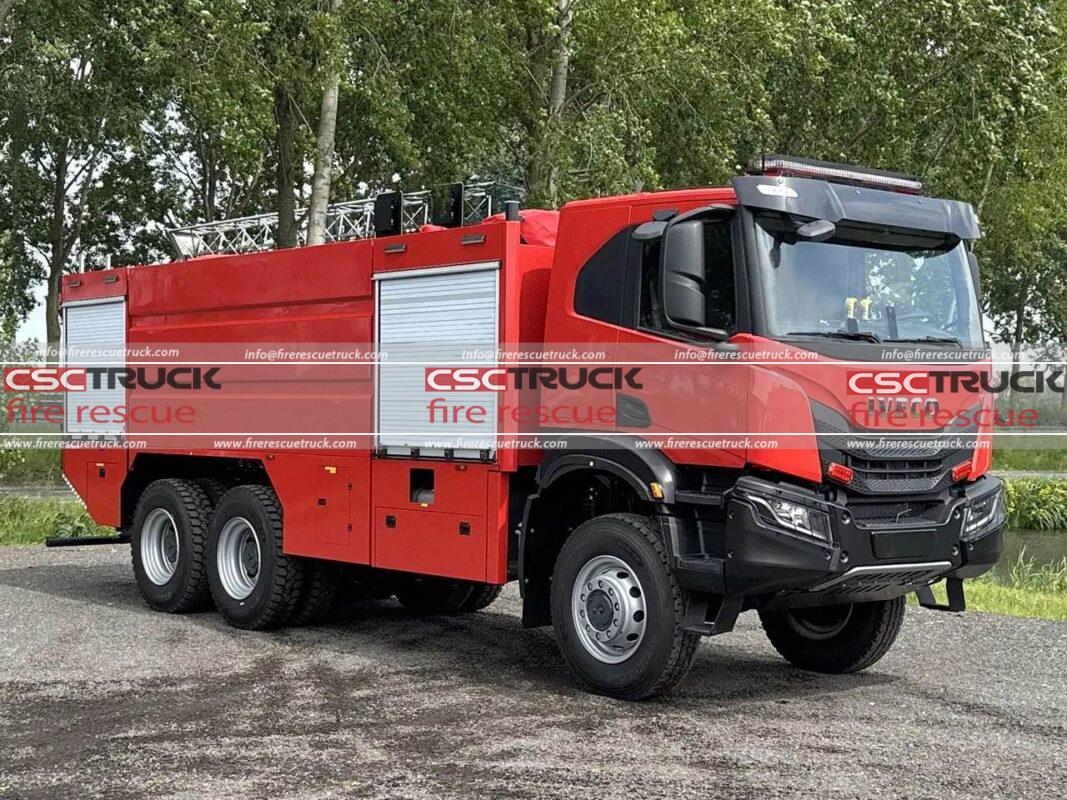
In modern firefighting operations, especially in remote areas, industrial zones, airports, forests, and disaster environments, a 6×6 fire truck provides the combination of mobility, power, and firefighting capacity required for extreme conditions. Unlike conventional urban fire engines that rely heavily on nearby hydrants, a 6×6 fire truck must often carry enough water to begin suppression immediately after arrival.
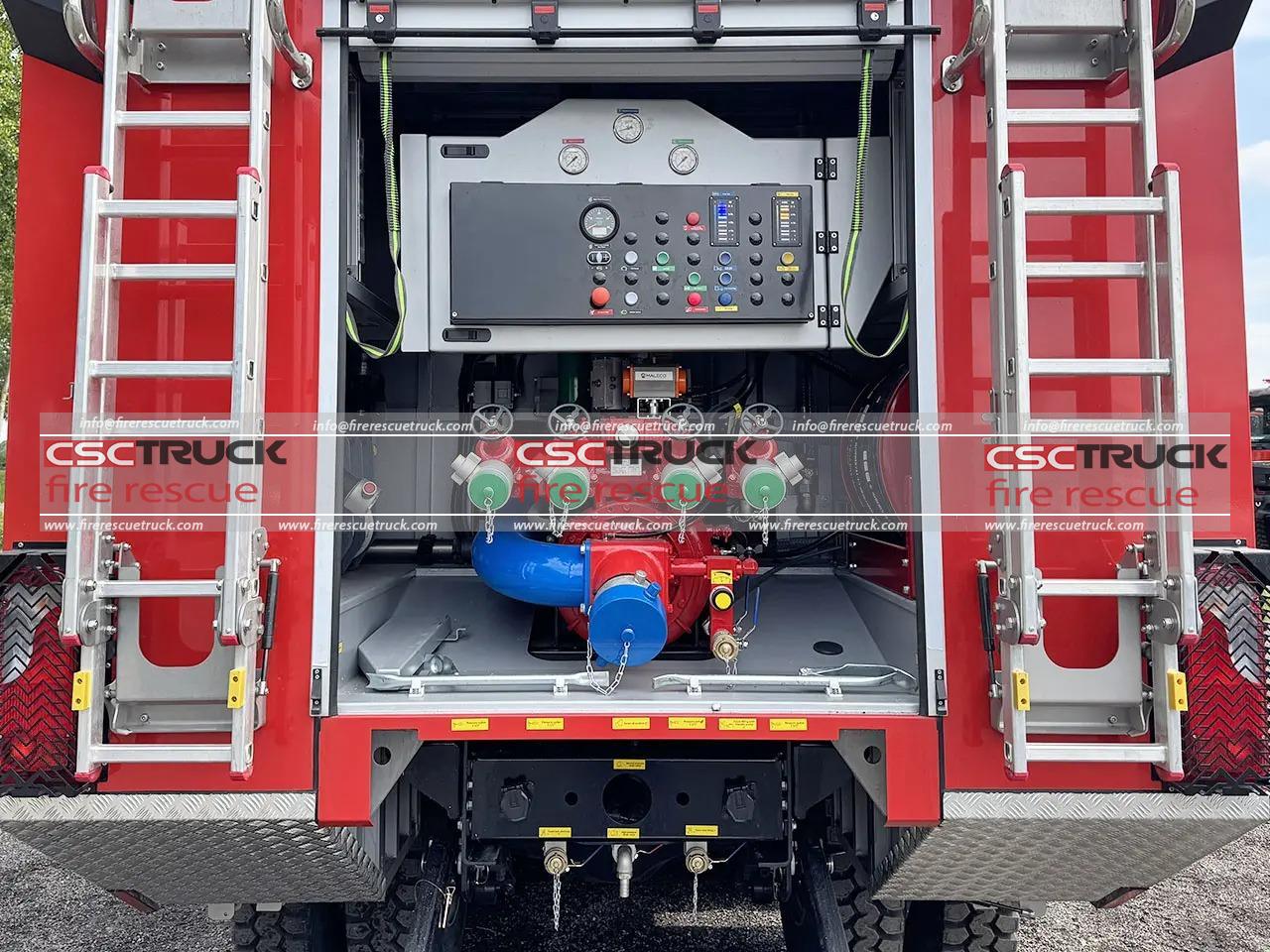
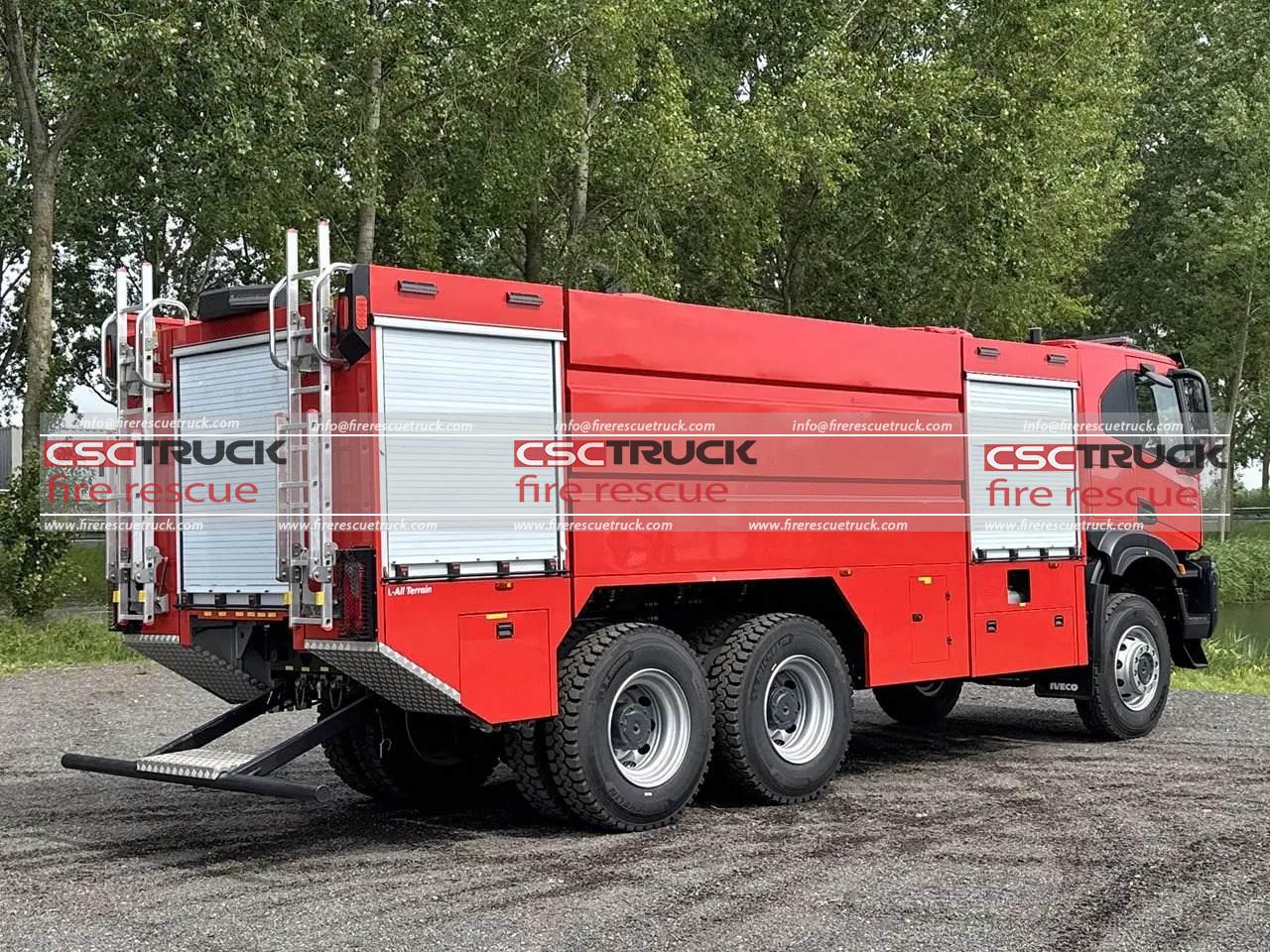
CSCTRUCK Fire Rescue Truck specializes in manufacturing high-performance fire rescue vehicles, including 4×4 and 6×6 all-wheel-drive fire trucks designed for demanding firefighting applications. Their solutions include water fire trucks, foam fire trucks, airport rescue and firefighting (ARFF) vehicles, and heavy-duty emergency response trucks. Depending on configuration and mission requirements, CSCTRUCK Fire Rescue Truck 6×6 fire trucks can be equipped with large water tanks ranging from several thousand liters to more than 13,000 liters.
The question of how much water a 6×6 fire truck should carry depends on many factors, including the firefighting environment, chassis capacity, pump performance, required operating time, and whether the vehicle is designed for municipal firefighting, wildland firefighting, industrial protection, or airport emergency response.
Typical Water Capacity of a 6×6 Fire Truck
A 6×6 fire truck is generally built on a heavy-duty chassis with three driven axles, allowing it to carry larger water tanks while maintaining excellent off-road capability. The water capacity commonly falls into several categories:
1. Small 6×6 Fire Trucks: 5,000–8,000 Liters
Smaller 6×6 fire trucks are designed for rapid response, rural firefighting, and areas where water sources are available, but the terrain is challenging.
Typical capacity:
- Water tank: 5,000–8,000 liters
- Foam tank: 300–1,000 liters
- Pump flow: 2,000–4,000 liters/minute
These vehicles are suitable for:
- Rural villages
- Mountain areas
- Forest roads
- Construction sites
- Mining operations
For example, a HOWO 6×6 Fire Water Truck from CSCTRUCK Fire Rescue Truck can carry approximately 6,000 liters of water with a 450-liter foam tank, providing a balance between mobility and firefighting endurance.
A 6,000-liter water tank allows firefighters to begin suppression immediately without waiting for a water supply connection. However, for large-scale fires, additional water supply vehicles may still be required.
Medium Capacity 6×6 Fire Trucks: 8,000–12,000 Liters
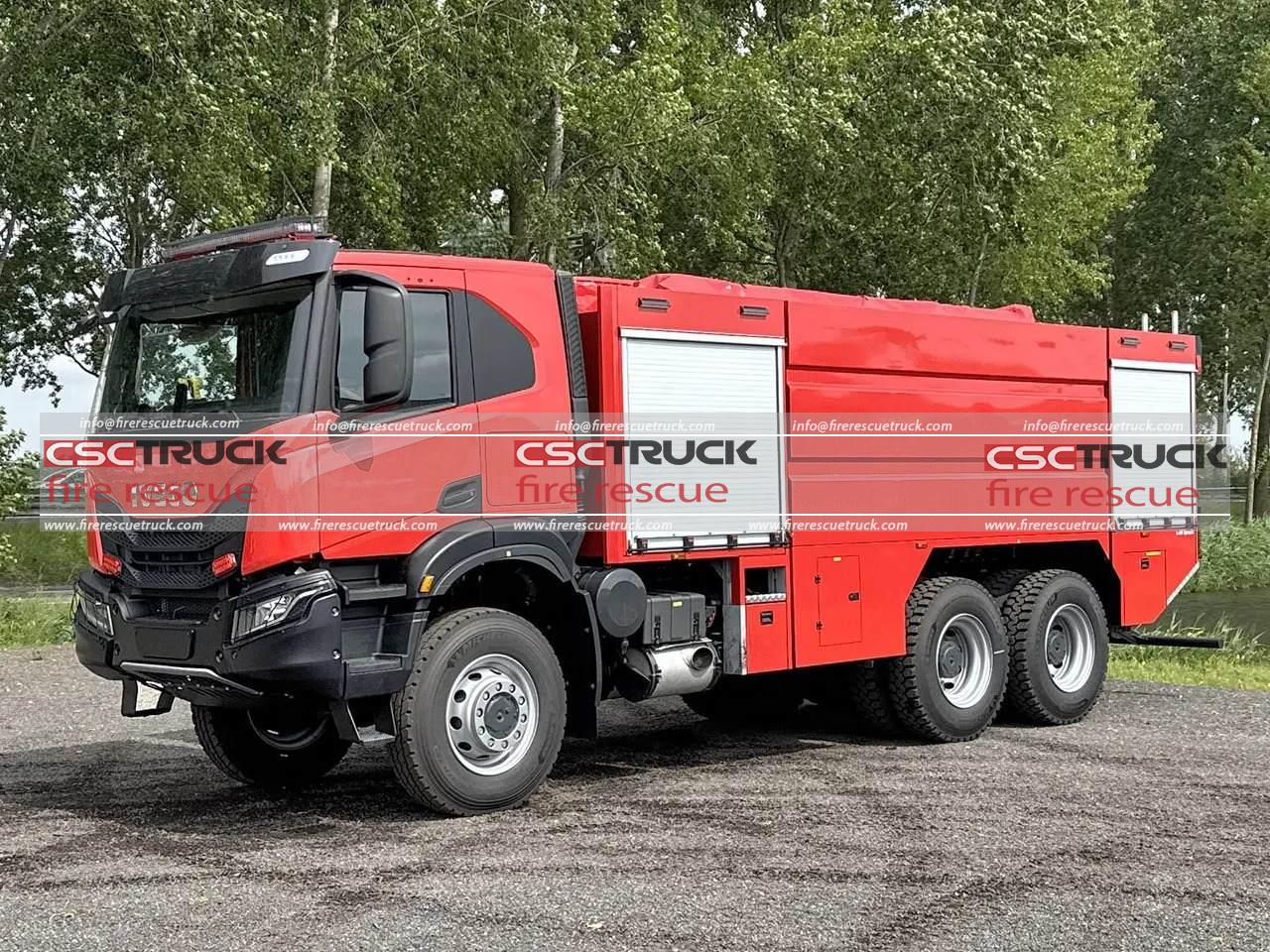
Medium-sized 6×6 fire trucks are among the most popular configurations for industrial and emergency firefighting.
Typical specifications:
- Water capacity: 8,000–12,000 liters
- Foam capacity: 1,000–2,000 liters
- Heavy-duty pump system
- High-flow monitors
These vehicles are commonly used for:
- Oil and gas facilities
- Chemical plants
- Military bases
- Airports
- Large warehouses
- Infrastructure protection
A 10,000-liter water tank provides significantly longer operating time compared with smaller trucks.
For example, if a fire monitor operates at:
- 2,000 L/min → 10,000 liters lasts about 5 minutes
- 4,000 L/min → 10,000 liters lasts about 2.5 minutes
Because modern fire trucks often use powerful monitors and pumps, water capacity must always be considered together with discharge rate.
Large 6×6 Fire Trucks: 12,000–16,000+ Liters
Large-capacity 6×6 fire trucks are designed for extreme firefighting conditions where immediate high-volume water application is critical.
These vehicles are commonly used as:
- Airport Rescue Fire Fighting (ARFF) trucks
- Industrial fire tenders
- Petrochemical emergency vehicles
- Heavy rescue firefighting units
Typical capacity:
- Water tank: 12,000–14,000 liters
- Foam tank: 1,500–2,000 liters
- Dry powder: 200–500 kg
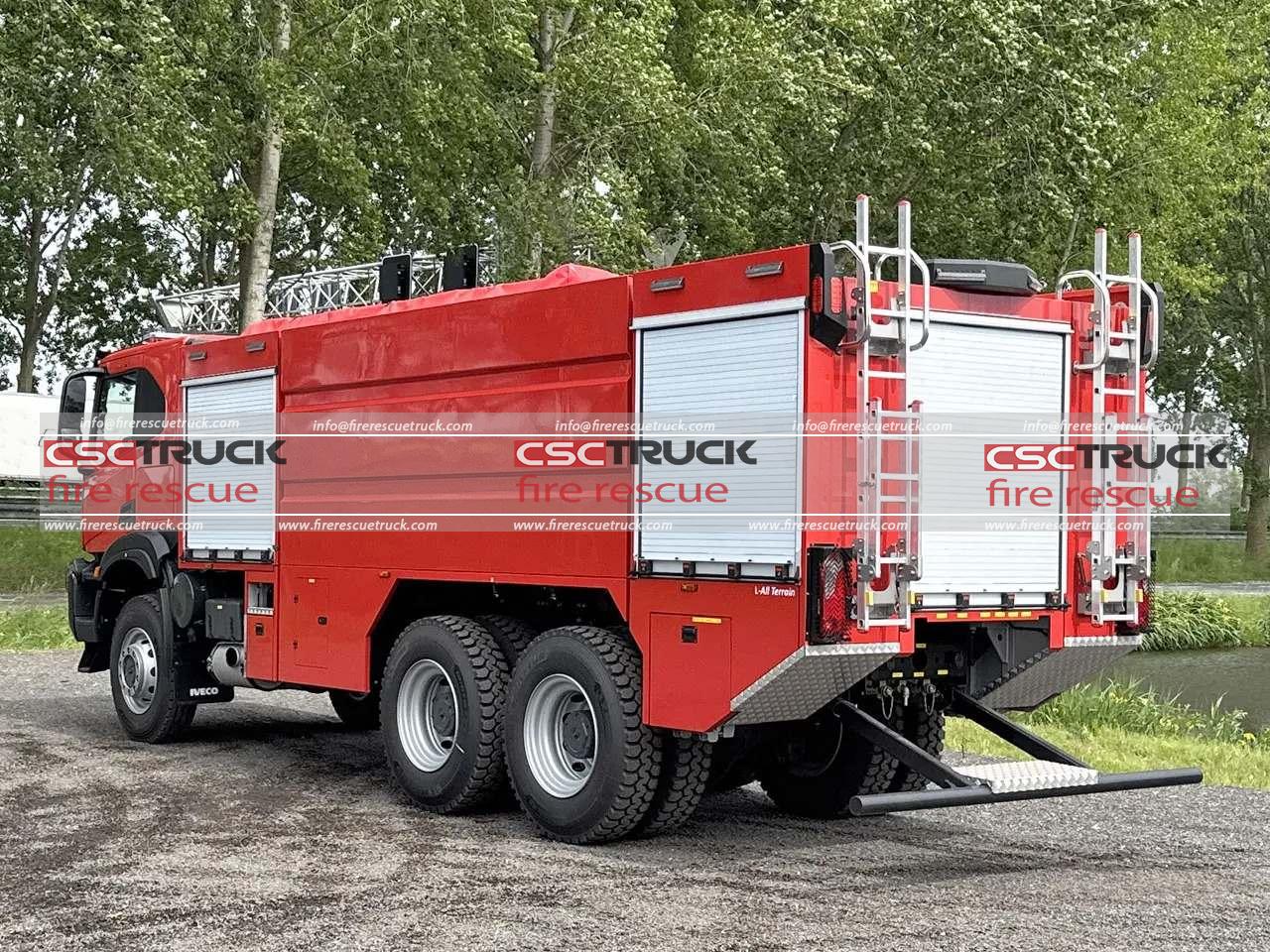
CSCTRUCK Fire Rescue Truck produces heavy-duty 6×6 ARFF fire trucks with capacities in this range. For example, one CSCTRUCK Fire Rescue Truck 6×6 ARFF model carries 12,000 liters of water, 1,500 liters of foam, and 250 kg of dry powder, designed for airport emergency response.
Another high-performance CSCTRUCK Fire Rescue Truck 6×6 ARFF vehicle carries 13,500 liters of water, 1,700 liters of foam, and 250 kg of dry powder, combined with a high-output firefighting pump system.
These large tanks allow firefighters to attack major fires immediately before establishing a continuous water supply.
Factors Determining the Right Water Capacity
Choosing the correct water capacity for a 6×6 fire truck requires evaluating several operational factors.
1. Fire Risk Level
Different environments require different water volumes.
Low-risk areas:
Examples:
- Rural communities
- Agricultural areas
- Small industrial sites
Recommended capacity:
5,000–8,000 liters
Medium-risk areas:
Examples:
- Factories
- Warehouses
- Commercial areas
Recommended capacity:
8,000–12,000 liters
High-risk areas:
Examples:
- Airports
- Oil refineries
- Chemical plants
Recommended capacity:
12,000–16,000+ liters
2. Pump Flow Rate
A large water tank alone does not guarantee firefighting performance.
A truck carrying 12,000 liters with a 6,000 L/min monitor will empty much faster than a truck using a 2,000 L/min nozzle.
For example:
- 6,000 L/min monitor → 12,000 liters lasts about 2 minutes
- 3,000 L/min monitor → 12,000 liters lasts about 4 minutes
High-capacity trucks usually combine large tanks with powerful pumps to deliver maximum suppression capability.
3. Terrain and Mobility Requirements
The advantage of a 6×6 chassis is not only water capacity but also mobility.
A heavy tank reduces:
- Acceleration
- Climbing ability
- Off-road performance
Therefore, manufacturers must balance tank size with chassis strength.
A 6×6 truck operating in mountains or forests may prioritize mobility and carry 6,000–10,000 liters, while an airport ARFF vehicle may prioritize maximum extinguishing capability with tanks exceeding 13,000 liters.
Water Capacity vs. Mission Type
| Application | Recommended Water Capacity |
|---|---|
| Rural firefighting | 5,000–8,000 L |
| Forest firefighting | 8,000–12,000 L |
| Industrial firefighting | 10,000–14,000 L |
| Airport ARFF | 12,000–16,000+ L |
| Military emergency response | 10,000–15,000 L |
| Oil & gas facilities | 12,000+ L |
Why 6×6 Fire Trucks Need Large Water Tanks
A 6×6 fire truck is often deployed where traditional firefighting infrastructure is limited. Remote locations may have:
- No nearby hydrants
- Difficult road access
- Long distances between water sources
- High fire intensity
A large onboard water supply provides critical advantages:
Immediate Fire Attack
Firefighters can start suppression immediately after arrival.
Reduced Dependence on Water Sources
The truck can operate independently for several minutes.
Better Emergency Preparedness
Large tanks improve response capability during:
- Wildfires
- Industrial accidents
- Airport emergencies
- Natural disasters
Conclusion
The ideal water capacity for a 6×6 fire truck depends on the intended application. For general rescue and rural firefighting, 6,000–8,000 liters may be sufficient. Industrial and emergency response vehicles typically require 10,000–14,000 liters, while airport rescue and high-risk firefighting vehicles often carry 12,000–16,000 liters or more.
CSCTRUCK Fire Rescue Truck offers a wide range of 6×6 firefighting solutions, from compact water fire trucks to large ARFF vehicles equipped with high-capacity tanks, foam systems, and powerful pumps. By selecting the correct combination of chassis, tank volume, and firefighting equipment, organizations can ensure faster response times and stronger fire suppression performance in the most challenging environments.
For most heavy-duty applications, a 10,000–14,000-liter water tank represents the optimal balance between firefighting endurance, vehicle mobility, and operational flexibility, making it one of the most common choices for modern 6×6 fire trucks.