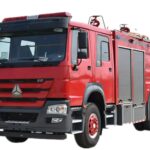
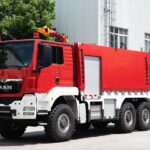
Fire trucks are designed for different firefighting environments, and choosing the right vehicle depends on the type of fire, available water supply, required suppression method, and operational conditions. 2 commonly discussed categories are water foam fire trucks and standard fire trucks. Although both can pump water onto a fire, their tank configurations, firefighting systems, foam capabilities, and typical applications can be significantly different.
Understanding the difference between a water foam fire truck and a standard fire truck is especially important for fire departments, industrial facilities, airports, oil and gas companies, and other organizations purchasing specialized emergency vehicles.
What Is a Water Foam Fire Truck?
A water foam fire truck is a specialized firefighting vehicle equipped to discharge both water and firefighting foam. Instead of relying exclusively on water, it carries a dedicated foam concentrate tank or foam proportioning system that allows operators to produce a foam solution.
Foam is particularly useful when fighting fires involving flammable liquids, such as gasoline, diesel, aviation fuel, solvents, and certain industrial chemicals. Foam can form a blanket over the burning surface, helping suppress flames and reduce the release of flammable vapors.
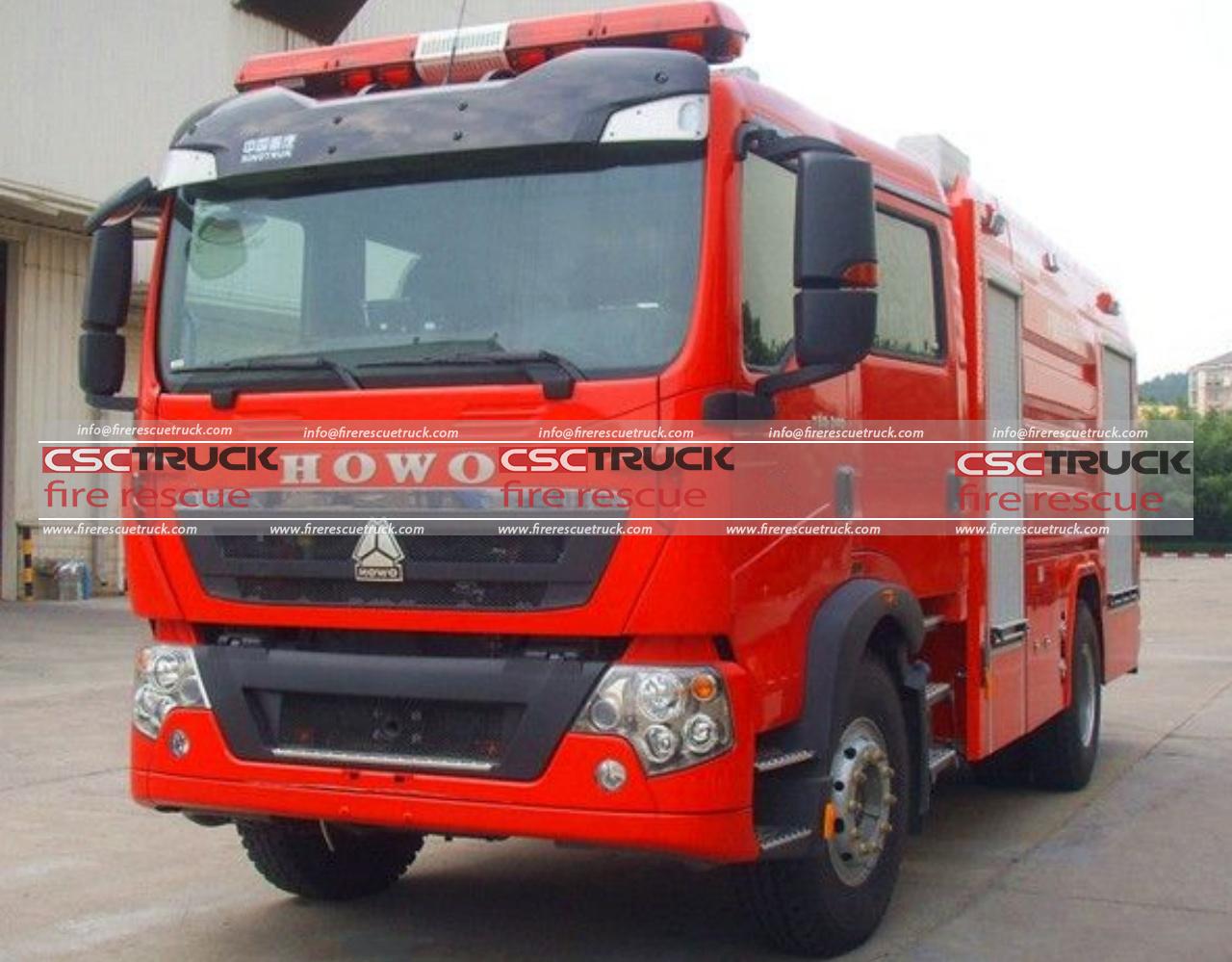
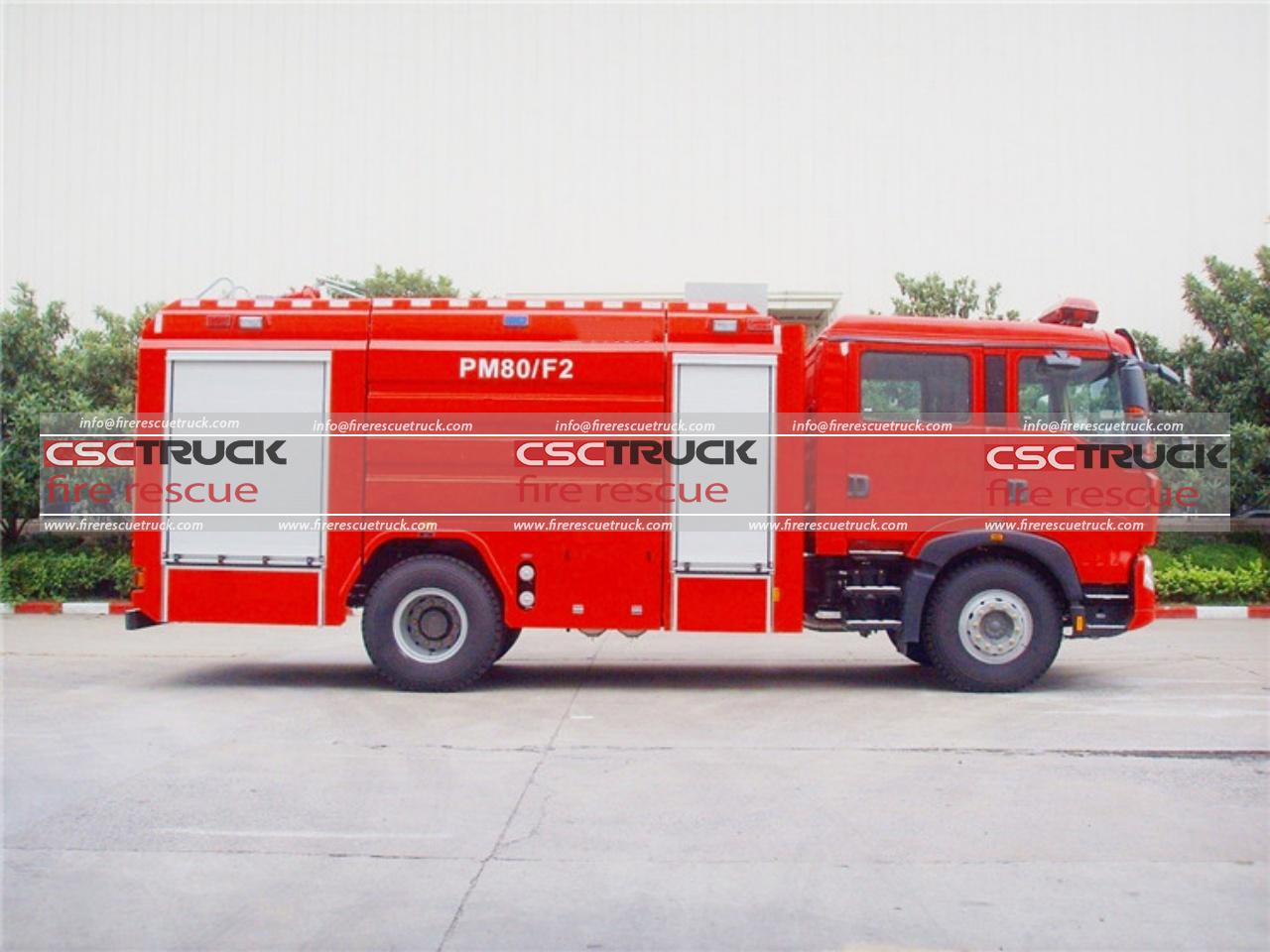
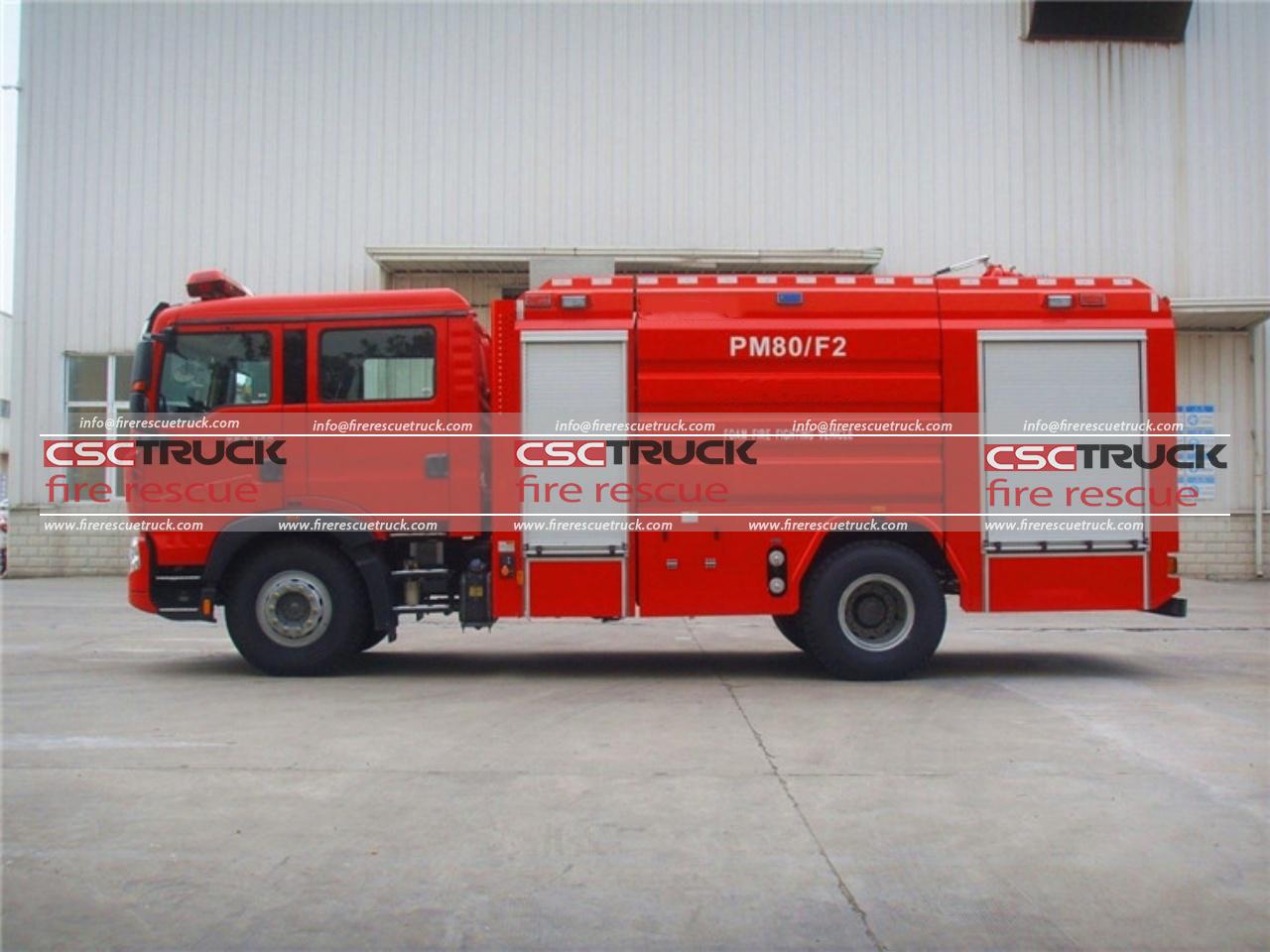
For example, CSCTRUCK Fire Rescue Truck offers foam fire trucks with separate water and foam capacities. Its HOWO 8-ton foam fire truck carries approximately 5,800 kg of water and 2,000 kg of Class-B foam, demonstrating the dedicated liquid-storage arrangement typical of this type of apparatus.
Water foam fire trucks can also be configured for municipal, industrial, petrochemical, airport-support, and other specialized firefighting applications.
What Is a Standard Fire Truck?
The term standard fire truck can refer to several types of conventional fire apparatus. In general, a standard municipal fire engine is primarily designed to provide a reliable supply of water for fire suppression while also carrying firefighters, hoses, rescue tools, and other equipment.
Depending on the model, a standard fire truck may obtain water from:
An onboard water tank
Fire hydrants
Natural water sources
Portable water tanks
Other firefighting vehicles
The vehicle normally includes a fire pump, hose connections, water outlets, and sometimes a roof-mounted or front-mounted monitor.
A standard water-based fire truck is particularly suitable for common Class A fires, including fires involving wood, paper, textiles, vegetation, and many building materials.
However, “standard” does not necessarily mean simple. Modern fire engines can include sophisticated pumps, monitors, electronic controls, rescue equipment, and customized chassis configurations.
Water Foam Fire Truck vs. Standard Fire Truck
The major differences can be summarized as follows:
Feature
Water Foam Fire Truck
Standard Fire Truck
Primary extinguishing media
Water + foam
Mainly water
Foam tank/system
Usually included
Often absent or limited
Class A firefighting
Yes
Yes
Flammable-liquid fires
Particularly suitable
May be less specialized
Fire pump
Yes
Yes
Foam proportioning
Usually available
Usually not standard
Typical applications
Industrial, fuel, airport, chemical
Municipal, residential, general fire response
Equipment complexity
Higher
Generally simpler
Water capacity
Varies by model
Varies by model
Purchasing cost
Often higher
Generally lower depending on configuration
The most important difference is therefore the ability to apply foam as a dedicated extinguishing agent, rather than simply delivering water.
1. Firefighting Medium
The first major difference is the extinguishing medium.
A standard fire truck primarily uses water. Water absorbs heat efficiently and can cool burning materials and surrounding structures. It is highly effective for many ordinary structural and vegetation fires.
A water foam fire truck can use both water and foam. Foam concentrate is mixed with water at a controlled proportion and discharged through suitable nozzles or monitors.
The resulting foam can cover the fuel surface and provide additional suppression benefits. This makes water foam vehicles particularly useful where ordinary water application alone may not provide the desired level of fire control.
2. Performance Against Flammable-Liquid Fires
This is one of the most important distinctions.
Fires involving petroleum products and other flammable liquids require different suppression strategies from ordinary structural fires. Simply applying a high-volume water stream may not be the preferred method for controlling every fuel fire.
Water-foam fire trucks are designed to address these scenarios using suitable foam systems.
For example, CSCTRUCK Fire Rescue Truck‘s larger foam fire engine configurations can carry substantial quantities of both water and foam. Its 12-wheel, 25-ton foam fire engine has approximately 18,100 kg of water and 6,500 kg of foam, with a fire pump rated at 90 L/s.
This type of capacity is valuable for large industrial facilities, fuel-storage areas, and other locations where extended foam operations may be required.
3. Tank Configuration
A standard water fire truck generally prioritizes water storage.
By contrast, a water foam fire truck needs space for both water and foam concentrate. This can affect vehicle dimensions, payload, tank design, weight distribution, and overall chassis requirements.
The ratio between water and foam capacity depends on the intended application. A compact municipal vehicle may have a relatively small foam tank, while a large industrial foam tender may carry thousands of liters of foam concentrate.
For example, CSCTRUCK Fire Rescue Truck‘s Mercedes-Benz 18,000L water foam tanker has 10,000L of water and 8,000L of foam, demonstrating how different the liquid-storage configuration can be from a conventional water-only vehicle.
4. Pump and Foam Proportioning System
Both vehicle types normally require a powerful fire pump, but a water-foam truck has additional equipment for foam application.
A typical foam system may include:
Foam concentrate tank
Foam proportioning equipment
Foam pump or injection system
Foam-compatible piping
Foam monitors or nozzles
Control valves
Foam-compatible discharge equipment
The system must deliver the correct water-to-foam concentrate mixture for the selected firefighting application.
Modern systems can also incorporate automated controls to simplify emergency operation.
5. Typical Applications
A standard fire truck is often selected for general municipal firefighting. Typical missions include residential fires, commercial building fires, vehicle fires, vegetation fires, and rescue operations.
Water foam fire trucks are more commonly associated with environments where foam provides an operational advantage.
Typical applications include:
Industrial Facilities
Factories, warehouses, chemical plants, and manufacturing facilities may face fires involving combustible or flammable materials.
Oil and Gas Facilities
Refineries, fuel terminals, tank farms, and petroleum-storage facilities can require large quantities of foam.
Airports
Aircraft accidents can involve aviation fuel, making specialized foam firefighting equipment important for airport emergency response.
Petrochemical Facilities
Petrochemical sites may require high-capacity water and foam systems capable of handling large-scale incidents.
Municipal Fire Departments
Some municipal departments also use combination water-foam vehicles when they require greater versatility.
6. Capacity and Firefighting Range
Another difference is the way the vehicle is configured for sustained firefighting.
A standard engine may emphasize maneuverability, crew transportation, hose deployment, and rapid connection to a hydrant or other water source.
A large water foam fire truck may instead emphasize high liquid capacity, high pump flow, long monitor range, and extended independent operation.
CSCTRUCK Fire Rescue Truck‘s 42-meter water and foam tower fire truck, for example, combines water, foam, and elevated firefighting capability. It carries up to 7,500 kg of firefighting water and provides a water monitor rated at at least 120 L/s.
This illustrates that water foam vehicles can be configured not only as conventional foam engines but also as specialized high-capacity firefighting platforms.
7. Which Fire Truck Should You Choose?
The right choice depends on the expected fire risks rather than simply the truck’s size or price.
A standard fire truck may be appropriate when the primary requirement is general-purpose firefighting, especially in urban or residential areas where hydrants and municipal infrastructure are readily available.
A water foam fire truck may be more appropriate when the operation involves:
Fuel storage
Petroleum products
Chemical facilities
Airports
Industrial plants
Large warehouses
Petrochemical operations
Other environments with significant flammable-liquid risks
Purchasers should evaluate tank capacity, pump flow, monitor range, foam type, foam proportioning method, chassis configuration, drive system, crew capacity, maintenance requirements, and applicable firefighting standards.
About CSCTRUCK Fire Rescue Truck
CSCTRUCK Fire Rescue Truck is a specialized manufacturer and supplier of firefighting and emergency-response vehicles, offering water fire trucks, foam fire trucks, water-foam combination vehicles, rescue trucks, airport fire trucks, and customized firefighting equipment. Its product range includes vehicles based on chassis from brands such as HOWO, Mercedes-Benz, Volvo, MAN, SCANIA, and ISUZU.
Its water-foam product range extends from compact vehicles for general emergency response to large-capacity industrial firefighting trucks. For example, CSCTRUCK Fire Rescue Truck‘s 5-ton 6-wheeler water foam fire engine combines 3.2 m³ of water with 1.6 m³ of foam, while larger models are available for industrial and high-capacity applications.
Conclusion
The fundamental difference between a water foam fire truck and a standard fire truck is the firefighting media and system configuration. Standard fire trucks primarily rely on water and are designed for broad, general-purpose firefighting. Water foam fire trucks add foam capability, making them particularly suitable for fires involving flammable liquids and specialized industrial risks.
For buyers, the decision should be based on the hazards at the operating site, required firefighting capacity, water availability, foam requirements, vehicle mobility, and applicable regulations. A properly specified water foam fire truck can provide greater versatility when both conventional water suppression and foam-based firefighting are required, while a conventional fire engine can remain a practical solution for general municipal emergency response.