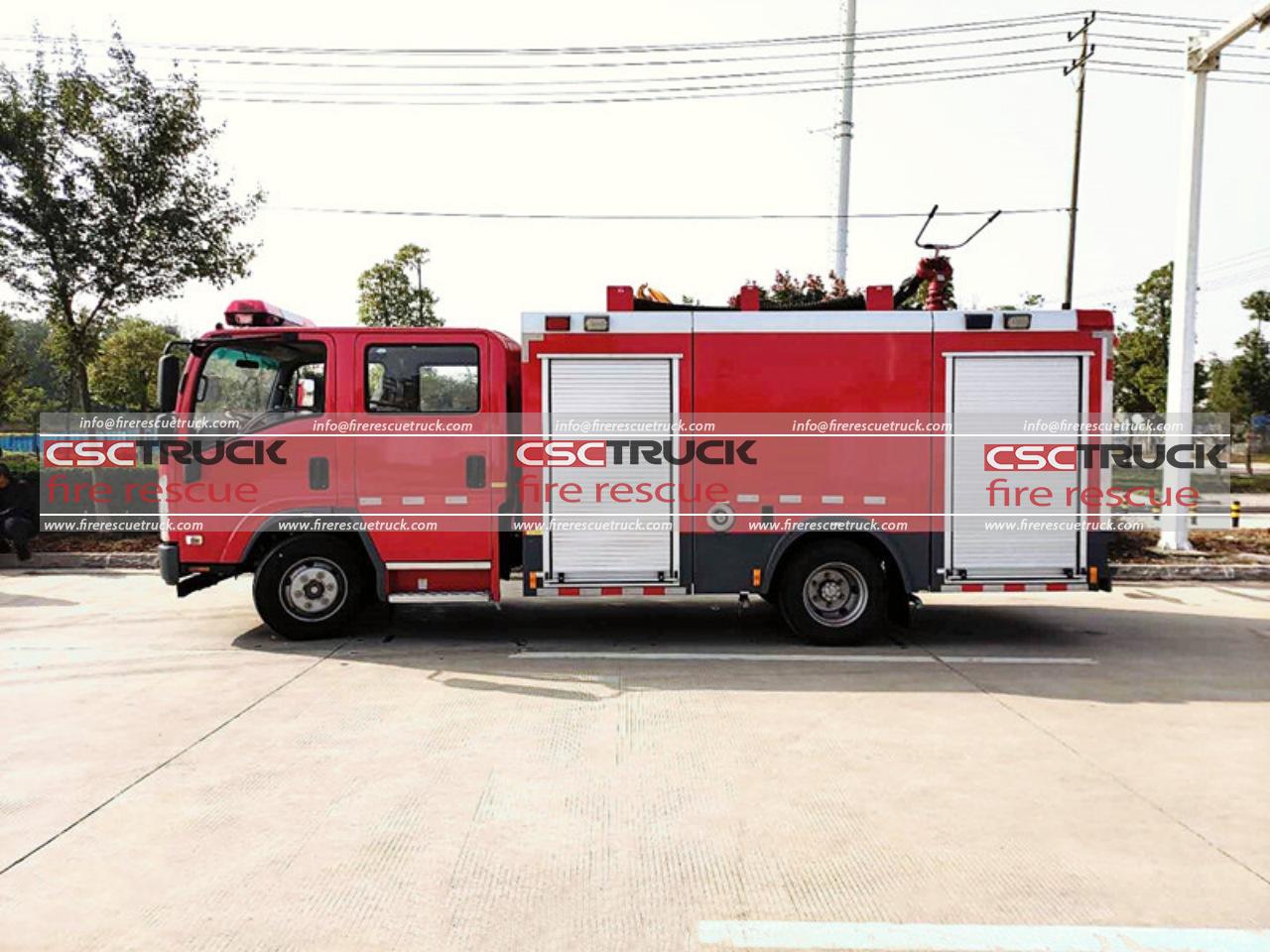
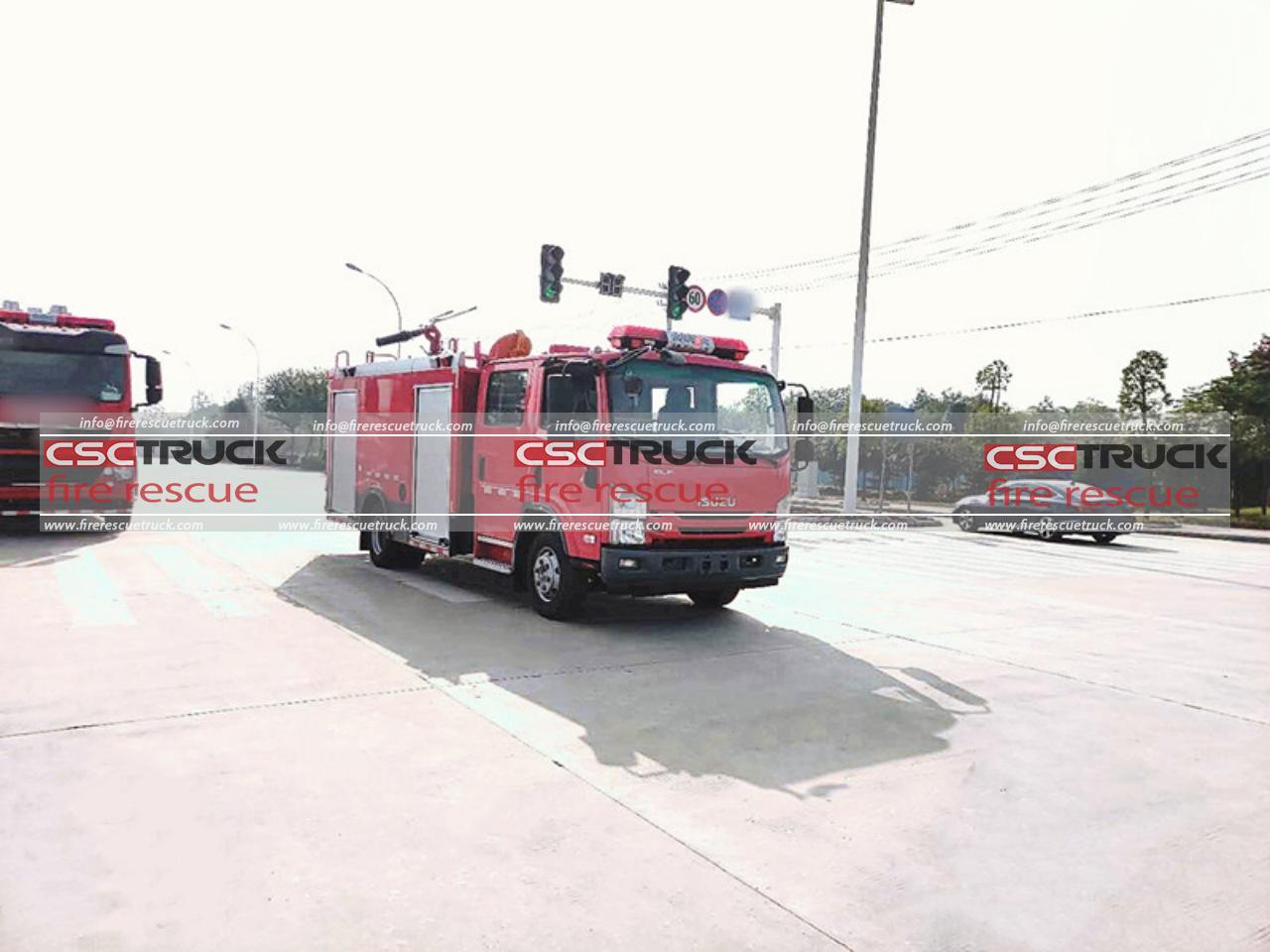
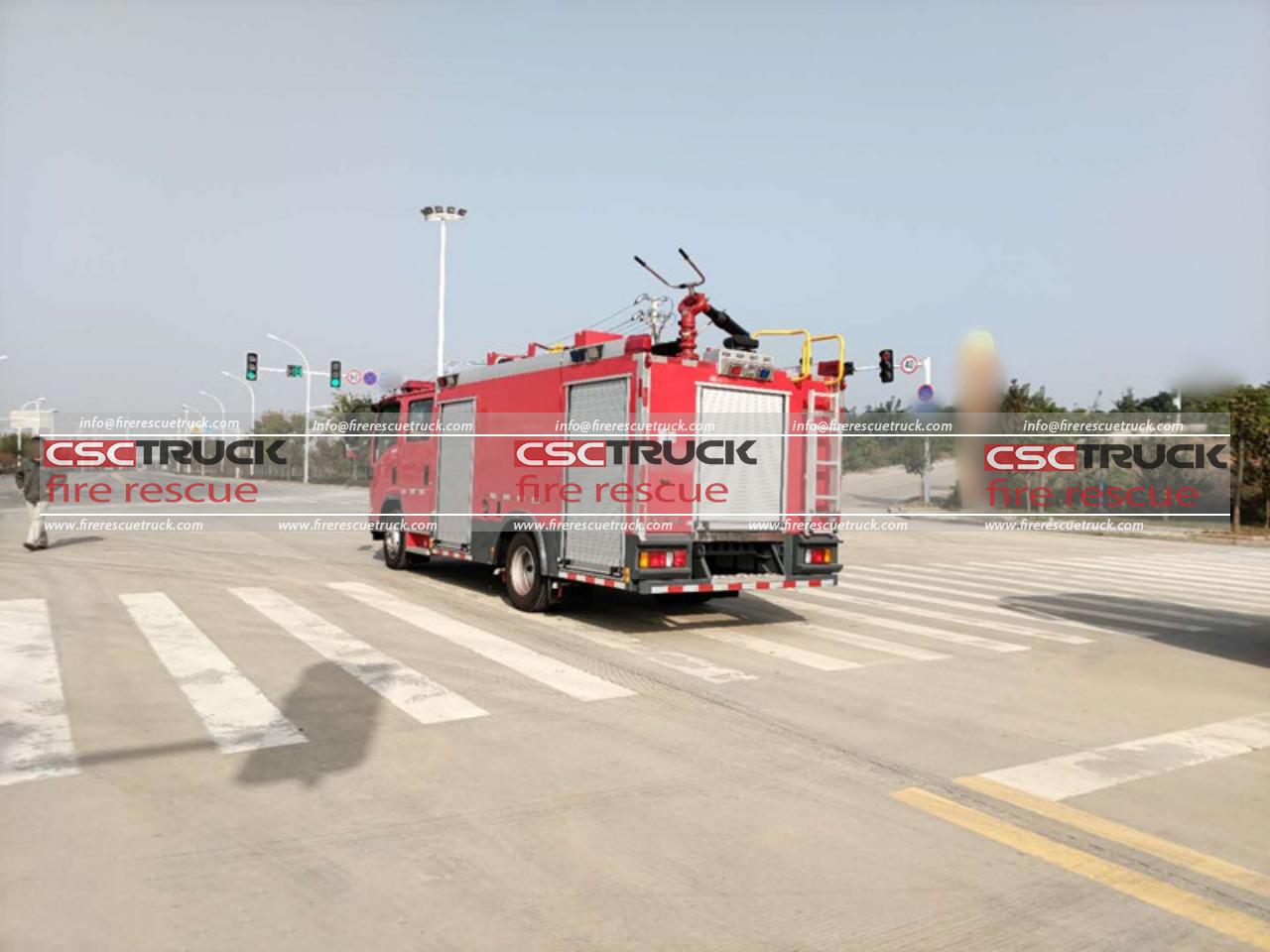
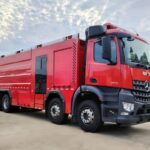
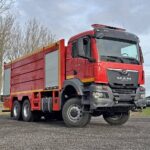
In modern firefighting and emergency response operations, access to a reliable and continuous water supply is one of the most critical factors determining success. In remote regions, industrial zones, construction sites, and disaster-affected areas, traditional hydrant networks are often unavailable or insufficient. To solve this challenge, the durable fire bowser engineered for long-distance water delivery by CSCTRUCK Fire Rescue Truck plays a vital logistical role in ensuring an uninterrupted water supply for firefighting operations.
This specialized fire bowser is designed as a high-capacity mobile water reservoir built to transport large volumes of water across long distances and difficult terrains. Unlike standard fire engines that primarily focus on pumping and immediate fire suppression, the fire bowser’s core function is water logistics—delivering, storing, and transferring bulk water where it is needed most.
Purpose and Role of the Fire Bowser
The fire bowser, also known as a water tanker fire truck, is engineered to serve as a mobile water supply unit. Its main role is to bridge the gap between water sources and fire attack operations. In many rural and industrial environments, fire hydrants may be kilometers away or absent. In such situations, the fire bowser becomes an essential asset in maintaining continuous firefighting capability.
The long-distance water delivery capability ensures that firefighting crews can sustain operations without interruption. The vehicle repeatedly shuttles water between a fill point—such as a hydrant, river, or reservoir—and the fireground, or it directly feeds other fire engines and portable water tanks.
According to technical fire logistics concepts, water bowser trucks are often categorized as support apparatus rather than primary attack units, but their importance increases significantly during large-scale incidents such as wildfires, industrial fires, and disaster scenarios where water demand is extremely high.
Engineering for Long-Distance Performance
The durability and efficiency of the fire bowser lie in its structural and mechanical engineering. Built on a heavy-duty chassis by CSCTRUCK Fire Rescue Truck, the truck is designed to withstand continuous operation under demanding environmental conditions.
One of the most important engineering aspects is the reinforced tank structure. The water tank is typically fabricated using high-strength carbon steel or corrosion-resistant materials. Internal anti-sloshing baffles are installed to reduce liquid movement during travel, improving vehicle stability and safety, especially when transporting large water volumes over long distances or uneven terrain.
The chassis is equally critical. Designed for heavy loads, it ensures stability even when the tank is filled. Depending on configuration, the vehicle may adopt 4×2, 6×4, or 8×4 drive systems to match terrain requirements. Off-road variants are equipped with enhanced suspension systems, reinforced axles, and high-torque engines to handle rural and rugged environments.
Water Transport and Delivery System
The fire bowser’s water delivery system is engineered for speed and efficiency. Large-diameter intake and discharge valves allow rapid filling and unloading of water. This ensures minimal downtime between trips, which is crucial during active fire suppression.
Water can be delivered in several operational modes:
Tanker Shuttle Operation
The fire bowser repeatedly travels between a water source and the fireground, refilling fire engines or portable tanks.
Direct Supply Mode
In remote fire zones, hoses may be connected directly to the bowser to supply firefighting lines.
Relay Support Operation
Multiple bowsers may work in sequence, transferring water over long distances where terrain or lack of infrastructure prevents direct access.
Drop Tank Filling
Portable reservoirs can be rapidly filled by the bowser to establish a temporary water supply base for fire engines.
These operational modes make the fire bowser a highly flexible tool in both urban expansion zones and rural firefighting environments.
Pumping and Flow Capabilities
Although the primary function of a fire bowser is transportation, many models also include integrated pumping systems. These pumps are capable of transferring water at high flow rates to ensure fast replenishment of firefighting units.
High-performance configurations from CSCTRUCK Fire Rescue Truck may include centrifugal fire pumps capable of delivering high-pressure water streams. These systems support efficient water transfer to attack engines or direct firefighting monitors, enhancing operational readiness during critical incidents.
In some configurations, water monitors (water cannons) are installed on the vehicle. These allow direct application of water at long range, providing an additional firefighting capability when immediate action is required.
Applications in Real-World Scenarios
The durable fire bowser is widely used in a variety of emergency and industrial environments:
1. Rural Firefighting
In rural areas where hydrant infrastructure is limited, the fire bowser becomes the backbone of water supply operations. It ensures that firefighters can maintain a continuous stream of water to protect homes, farmland, and forests.
2. Wildfire Response
During wildfires, water demand is extremely high, and terrain is often inaccessible. Fire bowsers are deployed to shuttle water between staging areas and fire lines, supporting both ground crews and aerial suppression units.
3. Industrial and Construction Sites
Large industrial complexes and construction zones often lack permanent water systems. Fire bowsers provide on-site fire protection and emergency water supply for safety operations and compliance requirements.
4. Disaster Relief Operations
After earthquakes, floods, or hurricanes, municipal water systems may fail. Fire bowsers provide emergency water delivery for firefighting and basic community support.
5. Temporary Event Safety
Large-scale outdoor events such as concerts or festivals may require temporary fire protection systems. Fire bowsers serve as mobile safety units in such scenarios.
Durability and Operational Reliability
Durability is a defining feature of the CSCTRUCK Fire Rescue Truck fire bowser. The vehicle is built to operate under continuous load conditions, extreme temperatures, and challenging terrain. Reinforced steel frames, anti-corrosion coatings, and high-strength welding techniques ensure long service life.
Maintenance accessibility is also a key design consideration. Components such as valves, pumps, and hose systems are positioned for easy inspection and repair, reducing downtime during emergency operations.
Conclusion
The durable fire bowser engineered for long-distance water delivery by CSCTRUCK Fire Rescue Truck is an essential asset in modern firefighting logistics. By combining large-capacity water transport, rugged engineering, and flexible delivery systems, it ensures that fire suppression operations can continue even in the most challenging environments.
From rural communities to industrial complexes and disaster zones, this vehicle plays a critical role in maintaining water supply continuity. Its ability to bridge the gap between water sources and firegrounds makes it a cornerstone of effective emergency response strategy, reinforcing the importance of reliable water logistics in saving lives and protecting property.