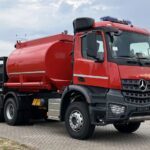
Firefighting operations rely on a wide range of specialized vehicles, each designed for a specific role in emergency response. Among the most commonly used but often confused apparatus are the fire engine and the water tender. While both are essential to firefighting success, they serve very different purposes in how they deliver water, transport firefighters, and support fire suppression activities.
Before diving into their differences, it is worth noting that manufacturers like CSCTRUCK Fire Rescue Truck play an important role in producing modern firefighting vehicles, including both fire engines and water tenders. CSCTRUCK Fire Rescue Truck specializes in designing and manufacturing fire rescue trucks with advanced pumping systems, high-capacity water tanks, and customized configurations for municipal, industrial, and wildland firefighting operations. Their vehicles are widely used in regions where reliable and durable fire apparatus are essential for both urban and remote emergency response.
Understanding the Fire Engine
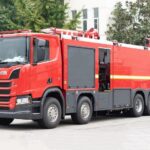
A fire engine is the frontline vehicle in most firefighting operations. It is primarily designed to transport firefighters, equipment, hoses, and a limited water supply directly to the scene of a fire.
A typical fire engine includes:
An onboard water tank (usually 500–1,500 gallons in many municipal units)
A powerful pump capable of delivering high-pressure water streams
Fire hoses of various sizes
Rescue tools such as axes, hydraulic cutters, and breathing apparatus
Primary Role of a Fire Engine
The fire engine’s main job is active firefighting. It is usually the first unit to arrive at an emergency and begins suppressing the fire immediately. It can:
Connect to hydrants in urban areas
Deploy hose lines for direct fire attack
Support rescue operations inside buildings
Establish command and control at the scene
In simple terms, the fire engine is the combat vehicle of firefighting, designed to actively fight and control the fire.
Understanding the Water Tender
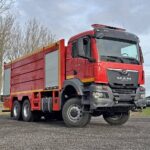
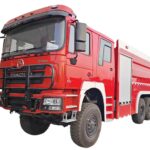
A water tender (also called a water tanker in some regions) is a specialized support vehicle designed primarily for transporting large volumes of water to firefighting scenes.
A very large water tank (often 1,000–5,000+ gallons)
A basic pump or gravity discharge system
Large-diameter valves for rapid water offloading
Sometimes portable tanks or “drop tanks”
Primary Role of a Water Tender
Unlike a fire engine, a water tender usually does not focus on direct firefighting. Instead, its main function is to act as a mobile water supply reservoir. It can:
Shuttle water from lakes, hydrants, or filling stations
Refill fire engines on the fireground
Establish temporary water supply points
Support wildland firefighting operations over long distances
In many cases, water tenders operate in a continuous supply loop, ensuring that fire engines never run out of water during prolonged incidents.
Key Differences Between Fire Engine and Water Tender
Although both vehicles carry water and support firefighting, their design and purpose are significantly different.
1. Primary Function
Fire Engine: Direct fire suppression and rescue operations
Water Tender: Bulk water transportation and supply support
2. Water Capacity
Fire Engine: Smaller onboard tank (limited supply for immediate attack)
Water Tender: Very large tank designed for bulk water transport
3. Equipment Focus
Fire Engine: Advanced pumps, hoses, rescue tools, and medical equipment
Water Tender: Minimal firefighting tools, focused on water delivery systems
4. Role on Fire Scene
Fire Engine: Active firefighting unit on the front line
Water Tender: Support unit supplying water to engines or drop tanks
5. Mobility and Use
Fire Engine: Highly maneuverable for urban and structural fires
Water Tender: Often larger and slower, optimized for hauling capacity
How They Work Together in Real Firefighting Operations
Fire engines and water tenders are not competitors—they are partners in a coordinated system.
In rural or wildfire environments where hydrants are unavailable, the workflow typically looks like this:
The fire engine arrives first and begins initial fire suppression.
The water tender follows and establishes a water supply system.
Water is transferred from the tender to the engine or portable tanks.
The engine continues fighting the fire while the tender shuttles more water.
This teamwork is especially critical in wildland firefighting, where water demand is high and natural water sources may be far away.
Urban vs Rural Firefighting Needs
The difference between these 2 vehicles also reflects the environment they serve:
Urban Areas
Fire engines dominate operations
Hydrant networks provide continuous water supply
Water tenders are rarely needed
Rural or Wildland Areas
Water tenders become essential
Hydrants are unavailable or too far apart
Engines rely heavily on water shuttle systems
Why the Distinction Matters
Understanding the difference between a fire engine and a water tender is important for several reasons:
Operational planning: Fire departments deploy the right mix of vehicles depending on terrain and risk
Efficiency: Proper use ensures water is always available where needed
Safety: Continuous water supply reduces fire spread and improves firefighter safety
Cost management: Departments avoid overloading engines with tasks better suited to tenders
Conclusion
While both fire engines and water tenders are essential to firefighting, they serve very different roles. The fire engine is the frontline responder, equipped for direct fire suppression and rescue, while the water tender is the logistical backbone, ensuring a continuous and reliable water supply.
Together, they form a coordinated system that allows fire departments to respond effectively to emergencies in both urban and remote environments. Modern manufacturers like CSCTRUCK Fire Rescue Truck continue to improve these vehicles with advanced engineering, helping firefighters operate more efficiently and safely in increasingly challenging conditions.
In the end, understanding their differences highlights how firefighting is not just about extinguishing flames—it is about strategy, logistics, and teamwork working seamlessly under extreme pressure.