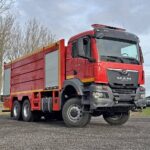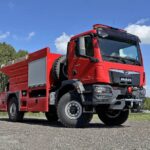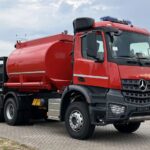

A water tender fire truck is a specialized firefighting vehicle designed primarily to transport and supply large volumes of water to fire scenes, especially in areas where hydrants are unavailable, unreliable, or too far away. It plays a critical role in rural firefighting, wildland fire suppression, industrial emergency response, and disaster operations where a continuous water supply is essential.
Unlike standard fire engines that focus on pumping water and carrying firefighting tools, a water tender’s main purpose is water logistics—moving, storing, and delivering water efficiently under emergency conditions.
Introduction to CSCTRUCK Fire Rescue Truck Solutions
In the global special-purpose vehicle industry, manufacturers such as CSCTRUCK Fire Rescue Truck have developed a wide range of fire and rescue vehicles to support modern emergency services.
CSCTRUCK Fire Rescue Truck fire trucks are engineered for durability, high-capacity performance, and multi-environment adaptability. Their product line includes water tender fire trucks, foam fire trucks, pumper trucks, and rescue units, designed to meet diverse firefighting needs across municipal, industrial, and rural environments. These vehicles typically integrate high-capacity tanks, robust chassis systems, and efficient pumping mechanisms, making them suitable for rapid deployment in emergencies.
Within this ecosystem, the water tender fire truck stands out as one of the most essential support vehicles in firefighting logistics.

Core Function of a Water Tender Fire Truck
The primary function of a water tender fire truck is simple but vital: Transporting large quantities of water to support firefighting operations.
In many emergency scenarios, especially in rural or undeveloped regions, fire hydrants may not exist. Even in urban areas, hydrants can be spaced far apart or become unusable due to infrastructure damage. In such cases, water tenders ensure that fire engines never run out of water.
Typical tasks include:
- Supplying water to fire engines on-site
- Establishing shuttle water supply operations
- Supporting wildfire containment lines
- Refilling portable water tanks and reservoirs
- Acting as a mobile water source during disasters
Structure and Key Components
A water tender fire truck is built around a high-capacity water tank system mounted on a heavy-duty chassis. Its structure is designed for both stability and efficiency, even when carrying tens of thousands of liters of water.
1. Water Tank System
The most important component is the tank, usually made from:
- Carbon steel (high strength)
- Stainless steel (corrosion resistance)
- Aluminum alloy (lightweight efficiency)
Tank capacities vary widely, commonly ranging from 5,000 liters to over 20,000 liters, depending on the vehicle class.
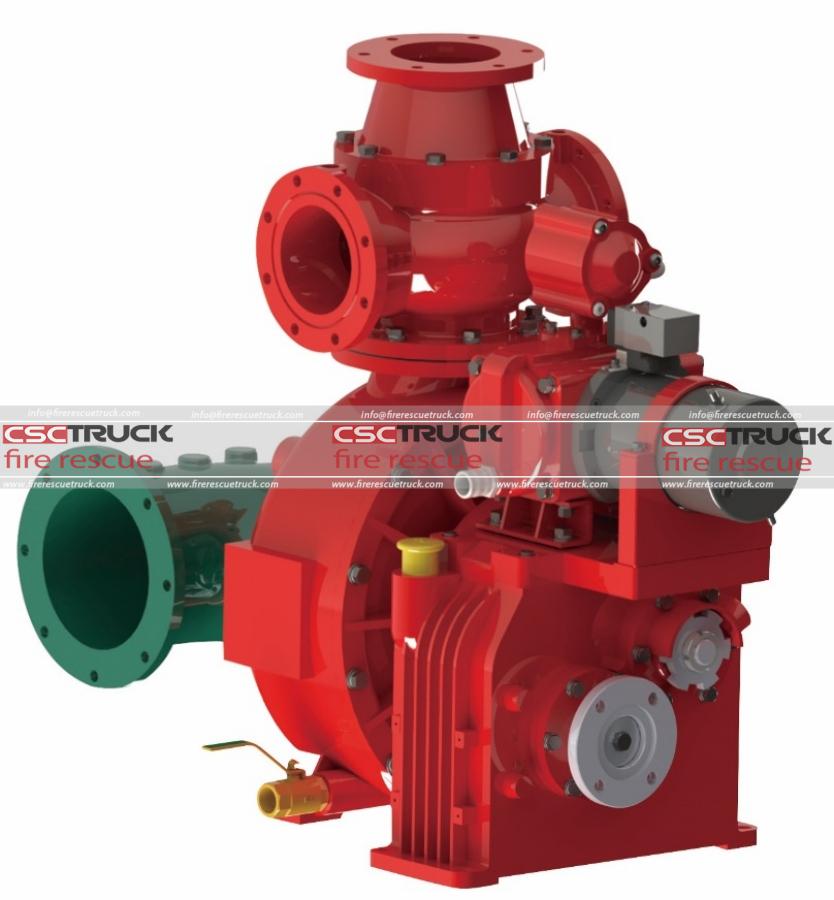
2. Pumping System
Water tenders are equipped with auxiliary pumping systems that allow:
- Rapid water discharge
- Hose connection to other fire trucks
- Gravity-fed or pressure-assisted water delivery
3. Chassis and Mobility System
The chassis is usually a heavy-duty commercial truck platform designed for:
- Off-road capability (for wildfires and rural terrain)
- High load-bearing capacity
- Stability during transport of large water volumes
4. Water Delivery Equipment
This may include:
- Hose reels
- Rear or side discharge valves
- Quick-connect couplings
- Gravity dump systems for fast unloading
5. Optional Firefighting Tools
Although not its primary role, some water tenders include:
- Basic firefighting monitors (water cannons)
- Portable pumps
- Emergency rescue tools

How a Water Tender Fire Truck Operates
Water tenders usually operate as part of a firefighting logistics chain, working alongside fire engines and aerial units.
A typical operation works like this:
- The fire engine uses its onboard water supply first.
- The water tender arrives at a staging area or fire scene.
- It either:
- Directly feeds water into the fire engine, or
- Refill portable tanks, or
- Dumps water into a temporary reservoir.
- Once empty, the tender returns to a water source (hydrant, lake, tank farm) and repeats the cycle.
This “shuttle system” ensures continuous water availability without interruption.
Types of Water Tender Fire Trucks
Water tenders come in different configurations depending on application:
1. Rural Water Tenders
- Designed for long-distance water hauling
- High-capacity tanks
- Suitable for farms, villages, and remote highways
2. Wildland Water Tenders
- Built for forest and bushfire environments
- Off-road tires and reinforced suspension
- Sometimes equipped with 4×4 drivetrains
3. Municipal Water Tenders
- Used by city fire departments
- Moderate capacity
- Focus on fast refill cycles and urban compatibility
4. Industrial Water Tenders
- Used in oil refineries, chemical plants, and factories
- Often corrosion-resistant tanks
- May include foam mixing systems

Advantages of Water Tender Fire Trucks
Water tenders provide several key advantages in firefighting operations:
1. Continuous Water Supply
They eliminate dependency on fixed hydrant systems.
2. High Water Capacity
A single vehicle can carry thousands of liters, reducing refill trips.
3. Operational Flexibility
They can serve multiple fire engines simultaneously.
4. Critical in Remote Areas
Essential for wildfire zones and rural emergencies.
5. Cost Efficiency in Large-Scale Fires
Reduces the need for fixed infrastructure or long hose deployments.
Importance in Modern Firefighting
Modern firefighting has evolved from simple water spraying to complex, coordinated emergency response systems. In this system, water tenders act as mobile water infrastructure units.
They are especially important in:
- Wildland fire suppression (increasing global wildfire frequency)
- Disaster response (earthquakes, floods, infrastructure collapse)
- Rapid urban expansion zones without full hydrant coverage
- Industrial accident containment
Without water tenders, many firefighting operations would face severe delays due to water scarcity.

CSCTRUCK Fire Rescue Truck’s Role in Fire Rescue Vehicle Development
Companies like CSCTRUCK Fire Rescue Truck continue to advance water tender technology by integrating:
- Higher-capacity lightweight tanks
- Improved pumping efficiency systems
- Enhanced off-road chassis configurations
- Modular firefighting equipment layouts
- Compliance with international safety standards
These improvements ensure that modern water tender fire trucks are not only powerful but also adaptable to diverse global emergency scenarios.
Future Development Trends
The future of water tender fire trucks is moving toward smarter and more efficient systems, including:
- Smart water monitoring systems (real-time tank level tracking)
- Hybrid or electric chassis integration
- Automated pump control systems
- Improved fuel efficiency and lightweight materials
- AI-assisted fleet coordination for large-scale emergencies
These innovations will make water tenders even more critical in global disaster response strategies.
Conclusion
A water tender fire truck is a vital support vehicle in firefighting operations, designed to ensure a continuous and reliable water supply in environments where traditional infrastructure is insufficient or unavailable. With large-capacity tanks, durable construction, and flexible operational roles, it serves as the backbone of water logistics in emergency response.
Through manufacturers like CSCTRUCK Fire Rescue Truck, these vehicles continue to evolve, combining traditional firefighting reliability with modern engineering innovation. As wildfires and urban emergencies become more complex, the importance of water tenders will only continue to grow.