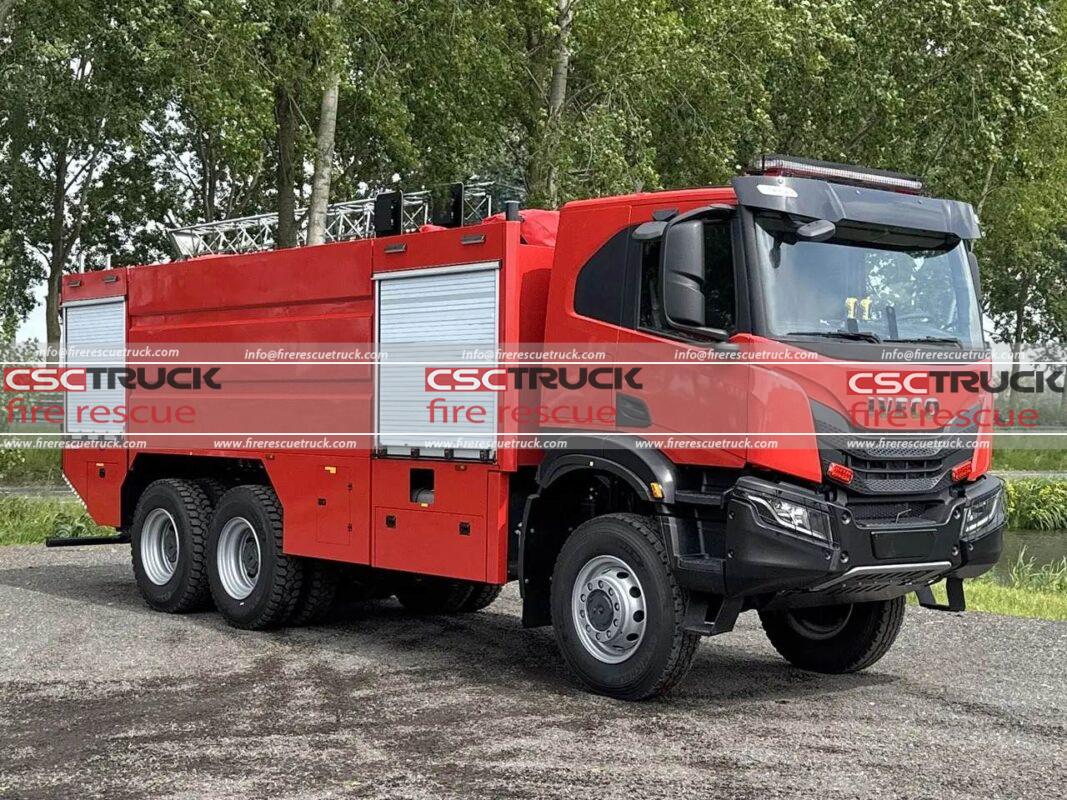
Modern firefighting operations often demand fast, powerful, and precise water delivery. Whether responding to industrial fires, airport emergencies, wildland incidents, or large commercial blazes, firefighters rely on specialized equipment capable of delivering high volumes of water or foam over long distances. One of the most important pieces of this equipment is the water monitor, also known as a fire monitor or water cannon.
Many buyers considering a heavy-duty 6×6 fire truck ask the same question: Does a 6×6 fire truck come with a water monitor? The short answer is YES—most 6×6 firefighting vehicles are equipped with at least one water monitor, although the exact configuration depends on the truck’s intended application, customer requirements, and manufacturer specifications.
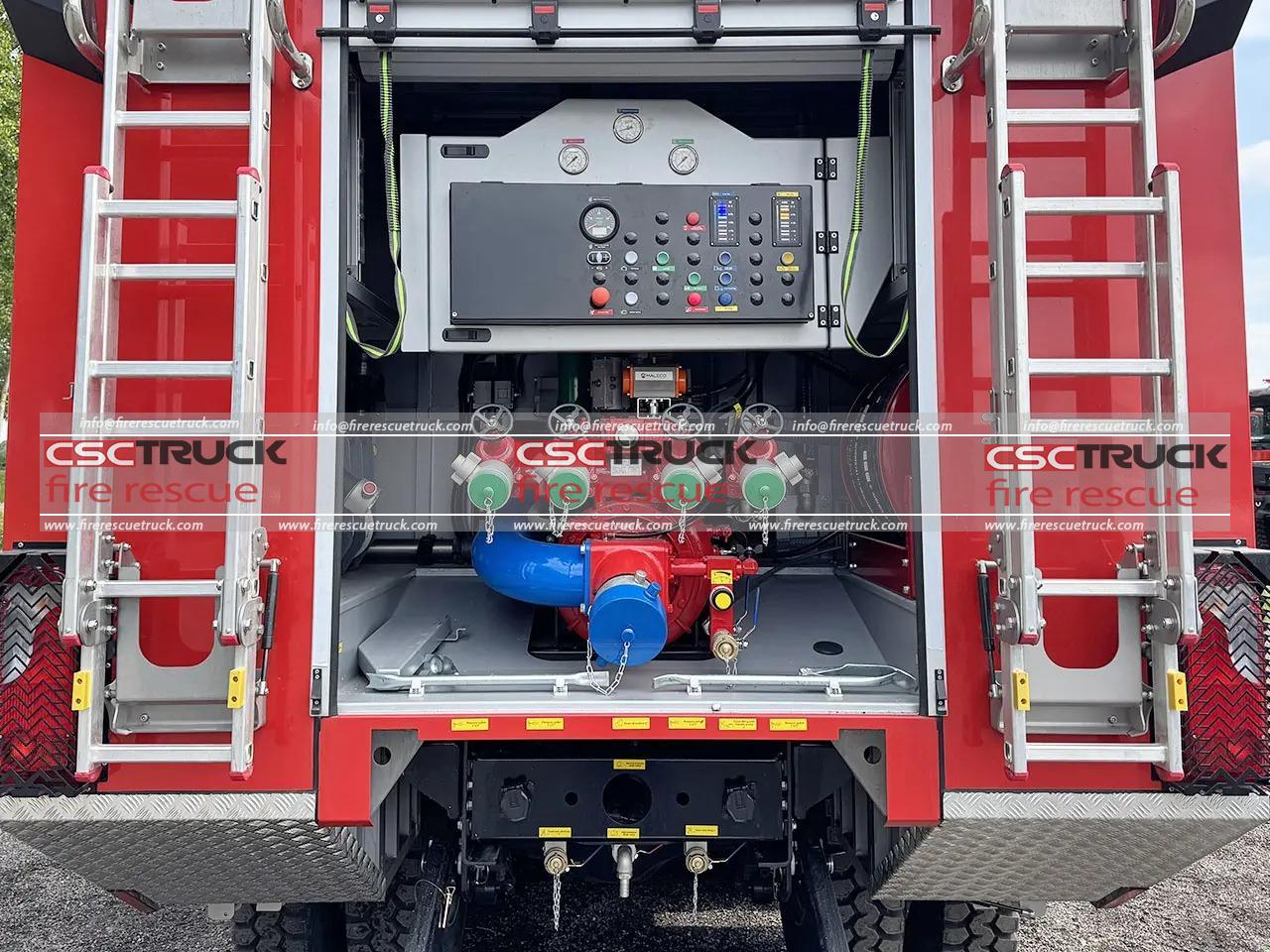
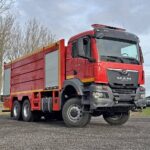
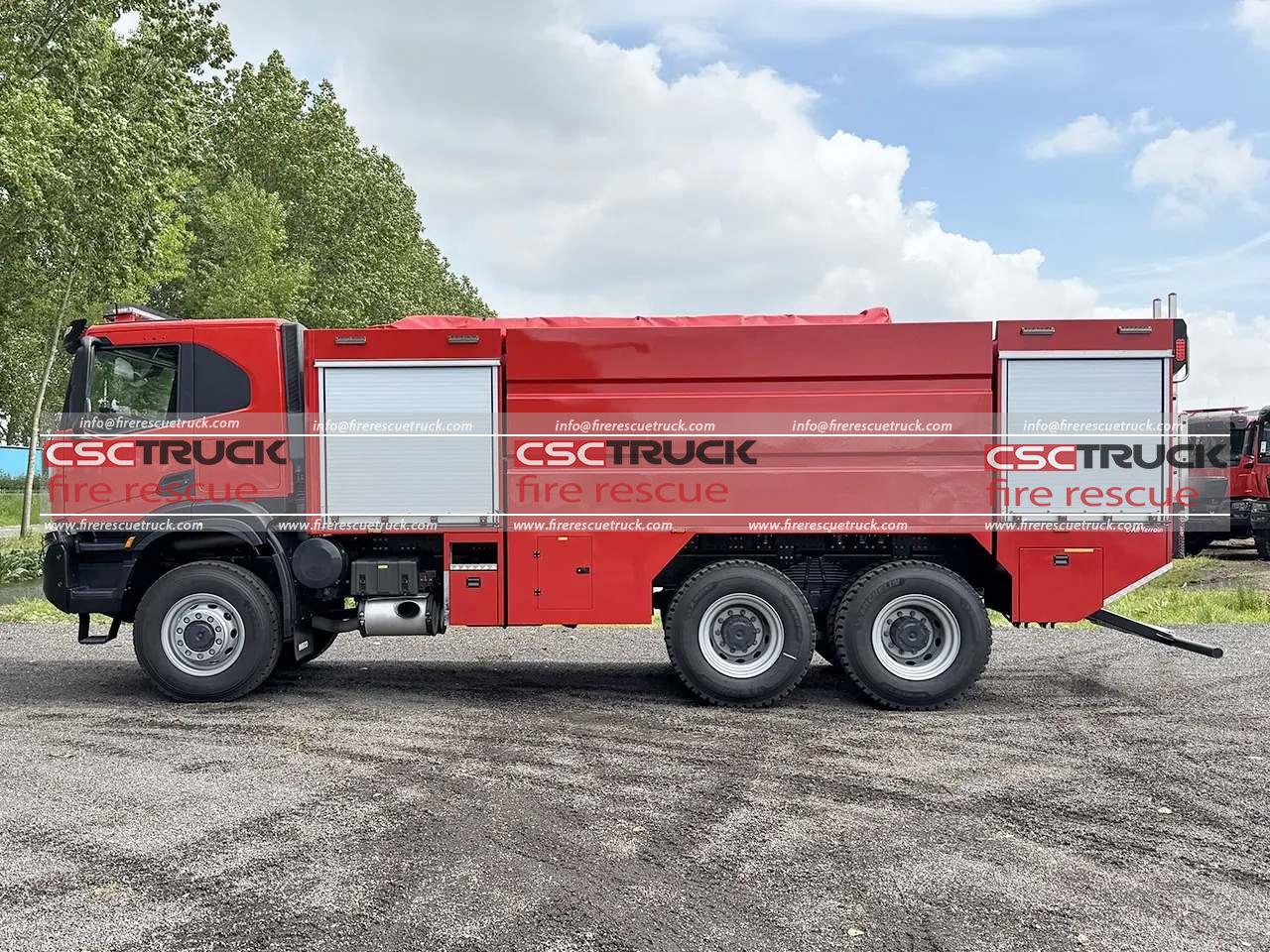
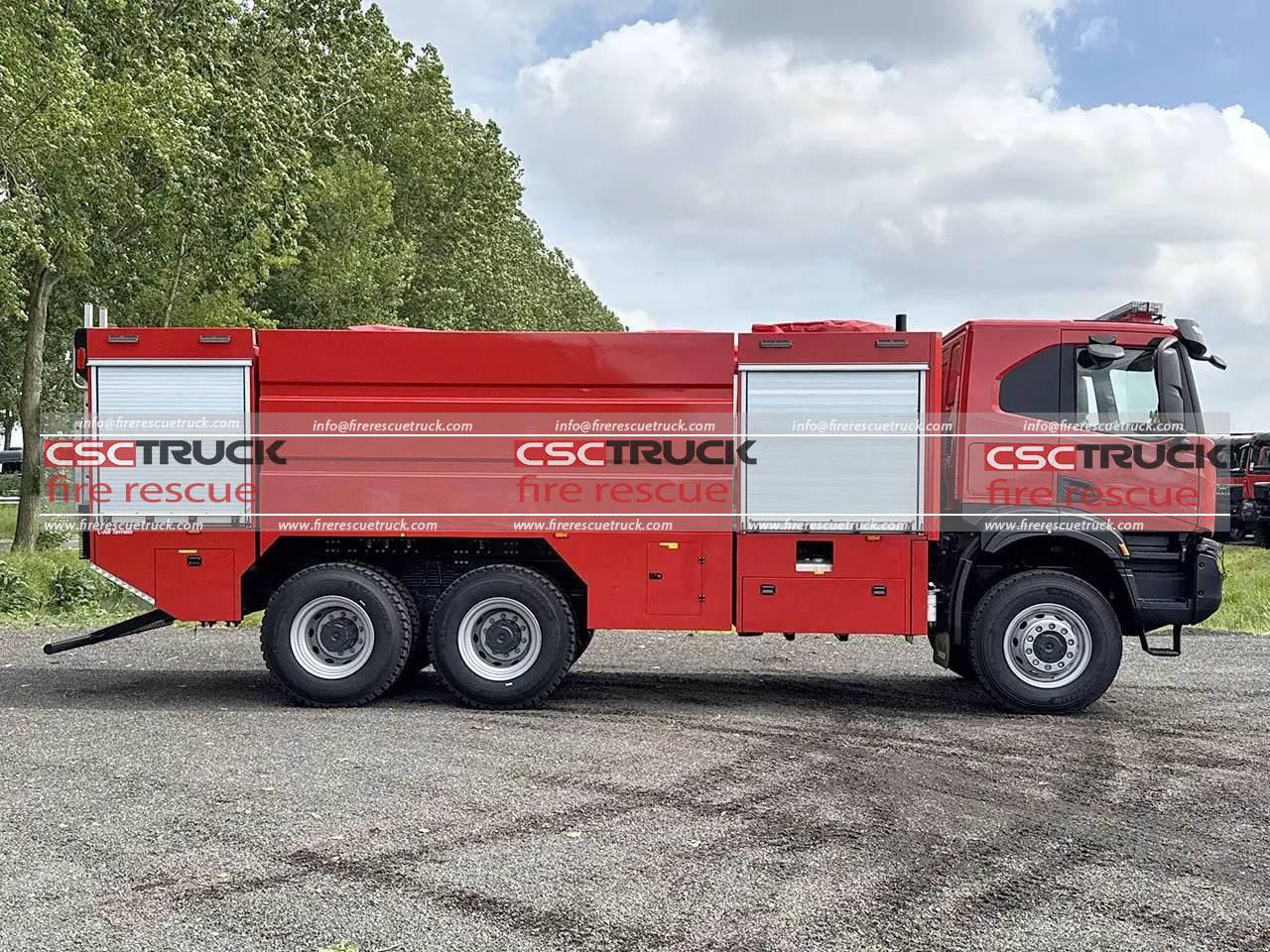
Among the manufacturers offering advanced off-road firefighting solutions, CSCTRUCK Fire Rescue Truck has become a recognized supplier of customized 6×6 fire trucks for municipal departments, airports, petrochemical plants, mining operations, military bases, and industrial facilities. Its product lineup includes heavy-duty rescue trucks, airport rescue and firefighting (ARFF) vehicles, water-foam fire trucks, and specialized off-road fire apparatus equipped with high-capacity pumps, foam systems, and roof-mounted monitors designed for demanding emergency operations. Recent CSCTRUCK Fire Rescue Truck 6×6 configurations feature roof-mounted monitors and pumps capable of outputs up to 8,000 L/min for large-scale firefighting applications.
What Is a Water Monitor?
A water monitor is a high-capacity nozzle mounted directly onto a fire truck. Unlike handheld hoses, a monitor can project large amounts of water or firefighting foam continuously while requiring minimal operator effort.
Water monitors are designed to:
- Deliver large water volumes rapidly
- Reach fires from safe distances
- Apply foam to fuel fires
- Protect firefighters from extreme heat
- Cool surrounding structures
- Suppress fires before crews advance
Depending on the design, monitors may be manually operated, electrically controlled, hydraulically controlled, or fully remote-controlled from inside the cab.
Why Are Water Monitors Important on 6×6 Fire Trucks?
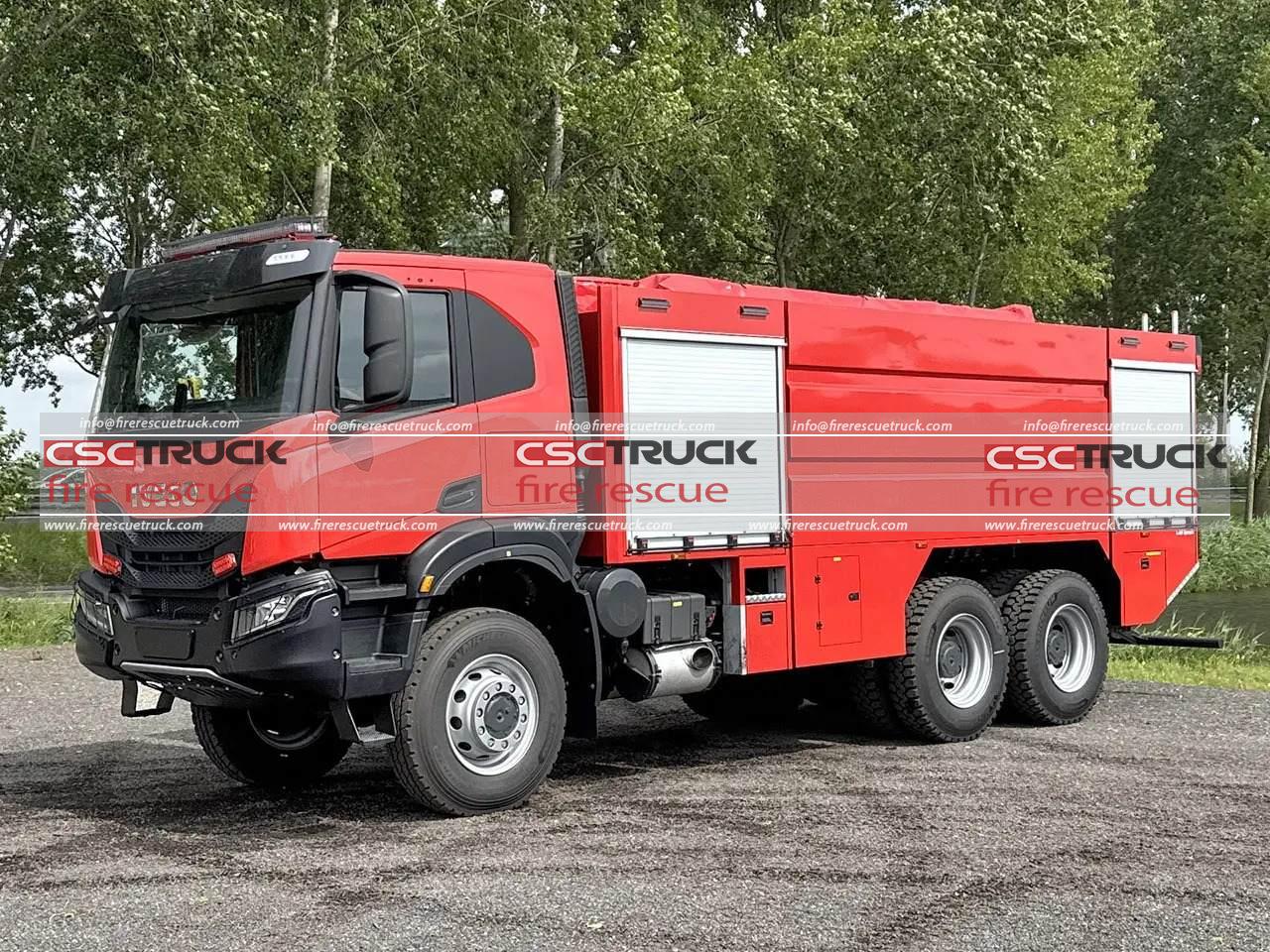
A 6×6 fire truck is typically used in environments where ordinary fire engines cannot easily operate. Examples include:
- Airports
- Oil refineries
- Chemical plants
- Forests
- Mining sites
- Military installations
- Mountain rescue
- Disaster response zones
These locations often involve large-scale fires requiring significant extinguishing power immediately after arrival.
Instead of deploying multiple firefighters with hoses, the crew can begin suppression instantly using the roof-mounted monitor while maintaining a safer distance.
This capability is particularly valuable during:
- Aircraft fuel fires
- Tank farm fires
- Fuel truck incidents
- Wildland interface fires
- Chemical storage fires
Types of Water Monitors Found on 6×6 Fire Trucks
Different firefighting missions require different monitor configurations.
Roof-Mounted Monitor
The roof monitor is the most common option.
Installed above the crew cab or body, it provides:
- Wide horizontal rotation
- High elevation angles
- Long discharge distances
- Excellent visibility
Roof monitors are ideal for:
- Industrial fires
- Aircraft fires
- Warehouse fires
- Tank fires
Many airport rescue trucks use roof monitors capable of discharging thousands of liters per minute.
Front Bumper Monitor
Many premium 6×6 fire trucks include a front bumper monitor.
Advantages include:
- Extremely low attack angle
- Better visibility during vehicle approach
- Improved firefighting while driving slowly
- Faster initial knockdown
Airport rescue vehicles frequently combine bumper and roof monitors to maximize attack flexibility.
Remote-Controlled Monitor
Modern trucks increasingly feature remotely operated monitors.
Operators can control:
- Horizontal movement
- Vertical movement
- Flow rate
- Spray pattern
Benefits include:
- Increased firefighter safety
- Faster deployment
- More accurate targeting
- Reduced operator fatigue
Typical Water Monitor Flow Rates
Monitor performance varies according to truck size and pump capacity.
Typical discharge rates include:
| Fire Truck Type | Typical Monitor Output |
|---|---|
| Municipal Pumper | 1,000–2,500 L/min |
| Industrial Fire Truck | 3,000–5,000 L/min |
| Airport ARFF 6×6 | 4,000–6,000+ L/min |
| Heavy Industrial 6×6 | Up to 8,000 L/min |
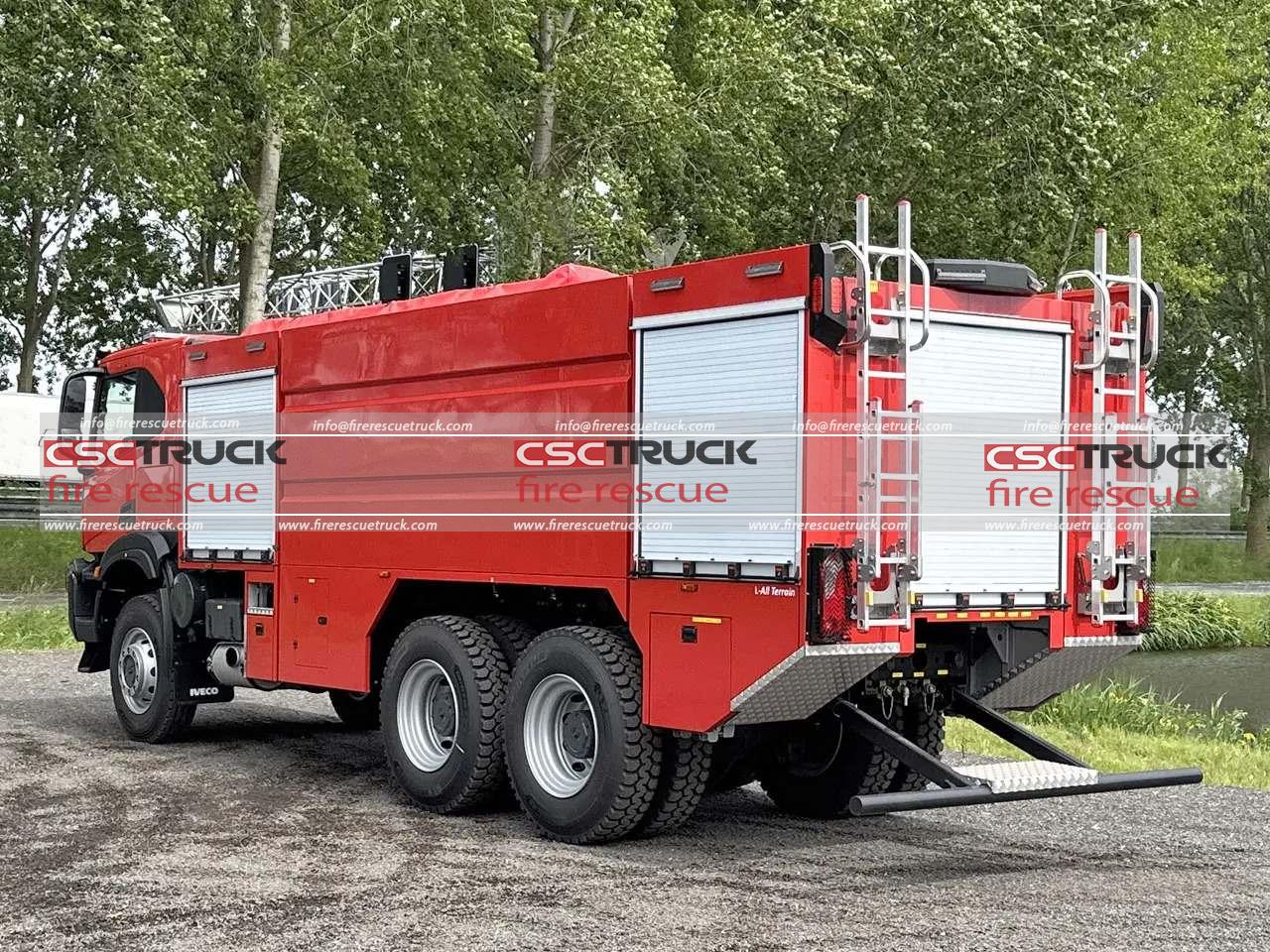
High-performance 6×6 ARFF vehicles from manufacturers like CSCTRUCK Fire Rescue Truck can utilize roof monitors delivering approximately 6,000 L/min, supported by pumps capable of 8,000 L/min, enabling rapid suppression of major aircraft and industrial fires.
Can the Water Monitor Spray Foam?
Yes.
Most modern 6×6 fire trucks combine:
- Water tank
- Foam tank
- Foam proportioning system
- High-capacity monitor
This allows operators to switch between:
- Water only
- Foam solution
- Variable foam concentration
Foam is essential for:
- Aviation fuel
- Gasoline fires
- Diesel fires
- Chemical storage
- Petroleum facilities
Many industrial customers specify automatic foam proportioning systems to ensure consistent foam performance.
Does Every 6×6 Fire Truck Include a Water Monitor?
Not necessarily.
The equipment depends on the truck’s mission.
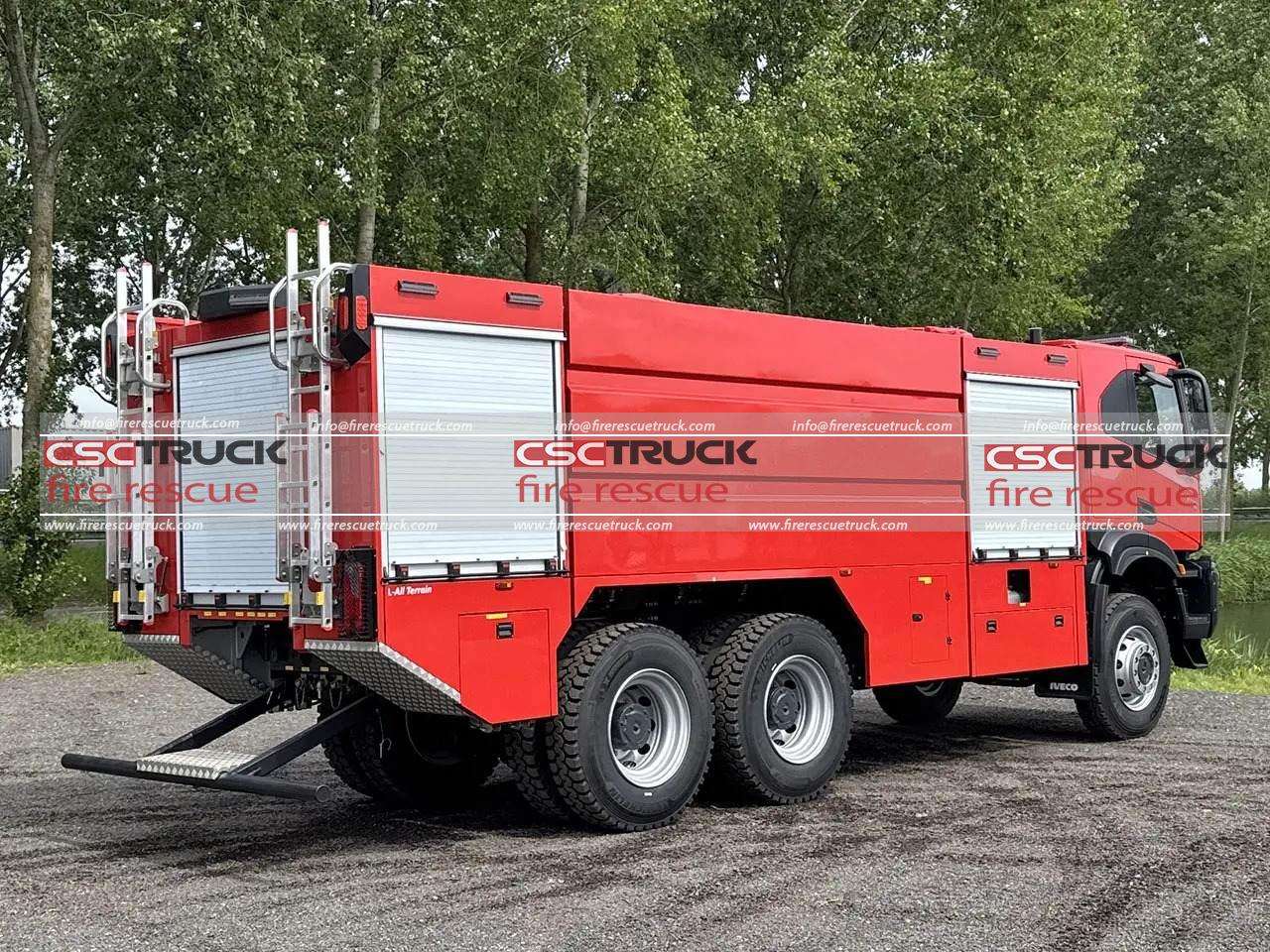
Water-Foam Fire Trucks
Usually include:
- Roof monitor
- Water pump
- Foam system
Airport Rescue Fire Trucks
Normally includes:
- Roof monitor
- Bumper monitor
- High-capacity pump
- Foam system
- Dry chemical system (optional)
Rescue Trucks
A heavy rescue truck designed primarily for technical rescue may focus on rescue tools, cranes, winches, lighting, and equipment storage rather than water suppression. For example, CSCTRUCK Fire Rescue Truck‘s dedicated 6×6 combination rescue vehicle carries extensive rescue equipment for disaster response instead of functioning as a conventional water tanker.
Wildland Fire Trucks
May include:
- Smaller roof monitor
- Front bumper spray
- Hose reels
Factors Affecting Water Monitor Performance
Several components influence overall effectiveness.
Pump Capacity
The monitor can only discharge what the pump supplies.
Typical heavy-duty pumps range from:
- 3,000 L/min
- 4,000 L/min
- 6,000 L/min
- 8,000 L/min
Water Tank Size
Large tanks provide longer operation.
Common capacities include:
- 6,000 liters
- 8,000 liters
- 10,000 liters
- 12,000 liters
- 13,500 liters
Foam Tank
Industrial trucks often carry:
- 500 liters
- 1,000 liters
- 1,700 liters
- 2,000 liters
Monitor Design
Performance depends on:
- Nozzle size
- Pressure
- Elevation angle
- Rotation speed
- Stream pattern
Advantages of Having a Water Monitor
Installing a monitor provides numerous operational benefits.
Faster Fire Attack
Fire suppression begins immediately after arrival.
Longer Reach
Monitors can project water much farther than handheld nozzles.
Improved Firefighter Safety
Crews remain farther from intense heat.
Reduced Crew Requirements
One operator can accomplish what might otherwise require several firefighters.
Better Foam Application
Large fuel fires require consistent foam blankets that monitors can deliver effectively.
Superior Exposure Protection
Monitors quickly cool nearby buildings, tanks, and equipment to prevent fire spread.
Optional Water Monitor Features
Manufacturers often provide customization options such as:
- Electric joystick controls
- Infrared camera integration
- Laser aiming systems
- Automatic oscillation
- Variable stream patterns
- Wireless remote control
- Stainless steel construction
- Corrosion-resistant coatings
- High-flow foam nozzles
These features enhance efficiency, especially in industrial and airport environments.
Choosing the Right Configuration
When selecting a 6×6 fire truck, buyers should consider:
- Required water flow rate
- Tank capacity
- Foam capability
- Maximum discharge distance
- Pump performance
- Manual versus remote control
- Roof monitor only or dual monitors
- Future maintenance requirements
- Operational environment
Fire departments operating primarily in urban areas may require different configurations than airport authorities or mining companies.
Conclusion
So, does a 6×6 fire truck come with a water monitor? In most cases, YES. Water monitors are a standard feature on many 6×6 water-foam fire trucks and ARFF vehicles because they provide the high-volume, long-range firefighting capability required for demanding emergencies. Depending on the intended application, a truck may be equipped with a roof-mounted monitor, a front bumper monitor, or both, along with advanced foam proportioning systems and high-capacity pumps.
Manufacturers such as CSCTRUCK Fire Rescue Truck offer customizable 6×6 firefighting platforms that can be configured with powerful water monitors, foam systems, remote controls, and large-capacity tanks to meet the operational needs of municipal fire departments, airports, petrochemical facilities, mining operations, and disaster response agencies. By selecting the appropriate monitor configuration and pumping system, emergency services can improve firefighting efficiency, enhance crew safety, and respond more effectively to some of the world’s most challenging fire incidents.